

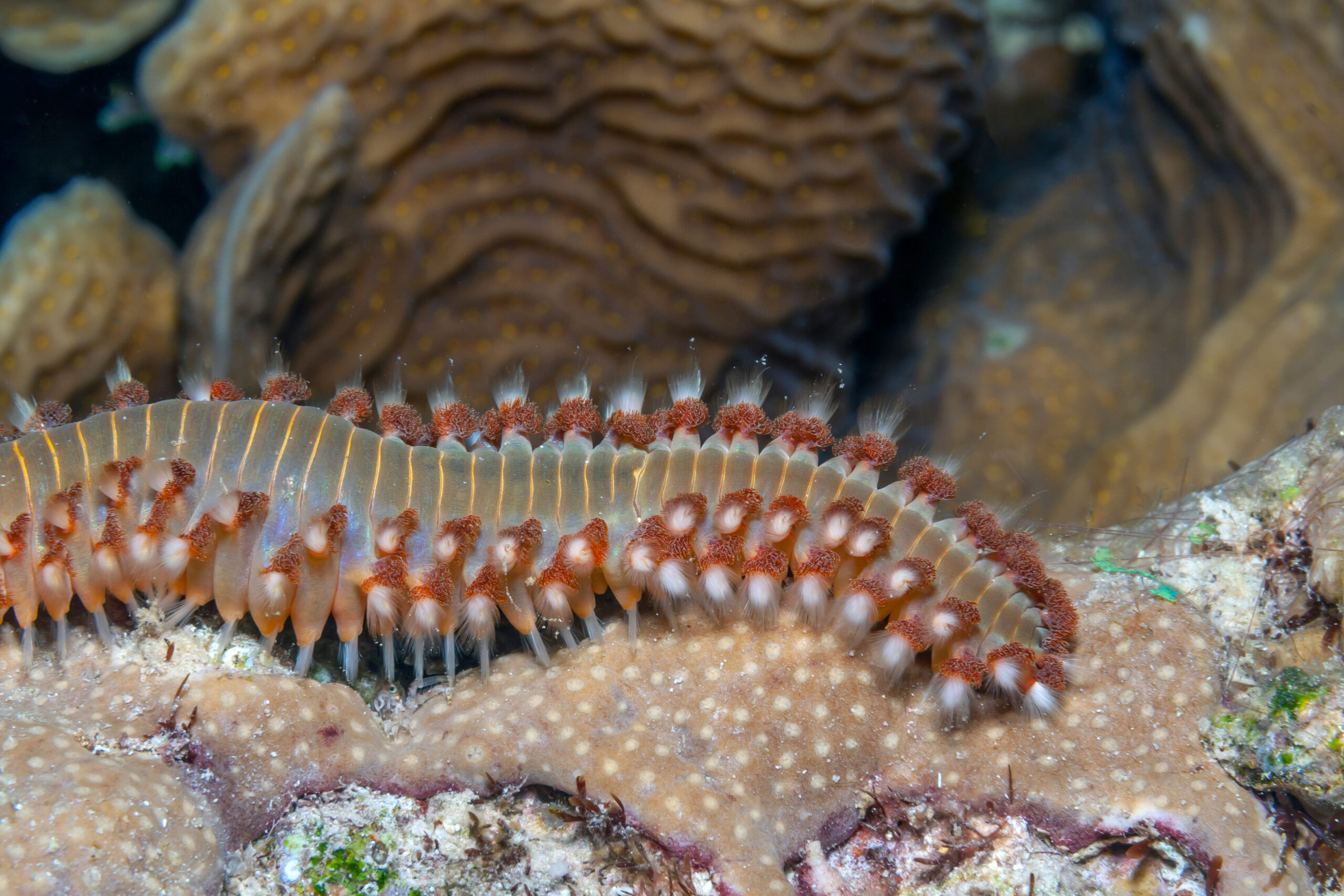
A tiny ocean worm has unlocked a profound secret about the evolutionary history of eyes.
Story Highlights
- Adult bristleworm eyes grow continuously using neural stem cells.
- The growth process is influenced by environmental light.
- Similar mechanisms are observed in vertebrate eyes.
- Discovery challenges previous understanding of eye evolution.
Revelation from the Ocean Depths
Bristleworms, small marine creatures, have provided new insights into the evolution of eyes, astonishing scientists with their unique optical development. Unlike the static eyes of most adult animals, bristleworms exhibit continuous eye growth, a process fueled by a rim of neural stem cells. This intriguing discovery parallels the eye development mechanism found in vertebrates, suggesting a deeper evolutionary connection between these distant life forms.
Watch:
The Role of Light in Eye Development
Light plays a crucial role in the bristleworm’s eye development. The research reveals that environmental light regulates this growth through a vertebrate-like c-opsin. This light-sensitive protein influences the growth and regeneration of the worm’s eyes, highlighting a sophisticated level of biological adaptation. Such findings not only enhance our understanding of bristleworm biology but also offer a glimpse into the evolutionary pressures that might have shaped the development of eyes across diverse species.
Implications for Evolutionary Biology
The bristleworm’s eye development challenges traditional views on the evolution of complex optical systems. The presence of similar developmental mechanisms in both marine worms and vertebrates could indicate a shared evolutionary pathway or convergent evolution. This discovery prompts a reevaluation of how scientists understand the emergence and diversification of eyes, a key adaptation in the animal kingdom that has enabled countless evolutionary advancements.
Future Research Directions
This breakthrough opens new avenues for research into the genetic and environmental factors influencing eye evolution. By further studying the genetic makeup and environmental interactions of bristleworms, scientists can gain deeper insights into the evolutionary processes that have shaped the diversity of life on Earth. This knowledge may eventually lead to advances in regenerative medicine and evolutionary biology, offering potential applications beyond understanding the natural world. Got a health question? Ask our AI doctor instantly, it’s free.
A tiny ocean worm just revealed a big secret about how eyes evolve
Scientists found that adult bristleworm eyes grow continuously thanks to a rim of neural stem cells similar to those in vertebrate eyes. This growth is surprisingly regulated by environmental light via a…
— The Something Guy 🇿🇦 (@thesomethingguy) December 3, 2025
Sources:
https://www.sciencedaily.com/releases/2025/12/251202052211.htm
https://scitechdaily.com/this-simple-sea-worm-has-a-secret-eyes-that-never-stop-growing/