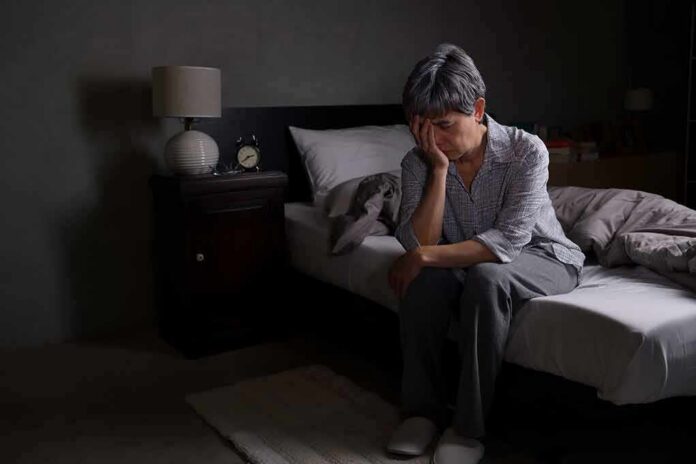
Waking up at 3 a.m. does not mean your sleep is broken. For many older adults, splitting the night into two stretches of rest is simply how an aging brain and body settle into sleep.
Quick Take
- Aging brings lighter, more fragmented sleep with more nighttime awakenings, a pattern backed by decades of sleep research.
- Older adults naturally shift toward earlier bedtimes and earlier wake times as their internal clock changes.
- Historical and modern pre-electric-light studies describe a “first sleep” and “second sleep” separated by an hour of quiet wakefulness.
- Doctors still want to rule out insomnia, sleep apnea, pain, and nighttime bathroom trips before calling a split-sleep pattern “normal.”
Why Older Bodies Sleep in Lighter, Shorter Waves
Sleep does not stay the same as people age. Research on sleep and circadian changes shows older adults spend more time in light sleep and less in deep, restorative sleep. Total sleep time shrinks, and the ability to hold one long, unbroken sleep stretch fades. That does not mean sleep quality collapses. It means the architecture of sleep itself shifts into a different, lighter pattern than what a 30-year-old experiences.
Part of this comes from the body’s internal clock moving earlier with age. Older adults tend to feel sleepy sooner in the evening and wake up sooner in the morning than younger adults do. Reviews of sleep-wake regulation describe this as a circadian phase advance, sometimes paired with a weaker overall rhythm signal. The result is a night that starts earlier, ends earlier, and sometimes includes a wakeful gap in the middle.
A Two-Sleep Pattern With Roots Before Electric Light
Long before light bulbs stretched evenings into the night, some historical accounts describe people sleeping in two segments. Scholarship on preindustrial societies points to a “first sleep” and “second sleep,” broken up by a period of calm wakefulness used for quiet tasks or rest. Researchers studying this pattern argue it may reflect a basic human rhythm rather than a modern sleep problem.
A well-known 1990s experiment reinforced this idea. Volunteers kept in darkness for 14 hours a day, without clocks or artificial light, gradually settled into two distinct sleep periods separated by quiet wakefulness. It took weeks for their bodies to adjust, but the segmented pattern held steady once it formed. That experiment remains one of the clearest modern demonstrations that split sleep is not automatically abnormal.
Where Normal Aging Ends and a Sleep Disorder Begins
None of this means every 3 a.m. awakening deserves a shrug. Sleep medicine guidelines still treat middle-of-the-night waking as a symptom worth evaluating, especially when it brings daytime grogginess, irritability, or trouble functioning. The American Academy of Sleep Medicine recommends behavioral treatment, not blanket reassurance, when waking disrupts someone’s ability to get through the day.
Clinicians also look for common culprits hiding behind nighttime waking. Pain, medication side effects, frequent bathroom trips, and sleep apnea all produce awakenings that look similar to a benign split-sleep pattern but carry their own treatments. Insomnia symptoms alone are reported by roughly a third to nearly half of older adults, even though far fewer meet the full criteria for a diagnosed insomnia disorder.
The practical takeaway favors common sense over panic. If a person falls back asleep easily, feels rested, and functions well during the day, an earlier-and-split sleep pattern likely reflects normal aging rather than a disorder. Sleep specialists advise against lying in bed fighting for sleep that will not come, and instead suggest getting up briefly until drowsiness returns.
That advice lines up with decades of behavioral sleep medicine, which favors working with the body’s signals instead of against them. For older adults frustrated by broken nights, the real question is not whether waking up happened, but whether the day that follows feels rested. That distinction, more than any clock reading, separates a healthy pattern from a problem worth treating.
Sources:
youtube.com, jcsm.aasm.org, aasm.org, aafp.org, mayoclinic.org, pmc.ncbi.nlm.nih.gov