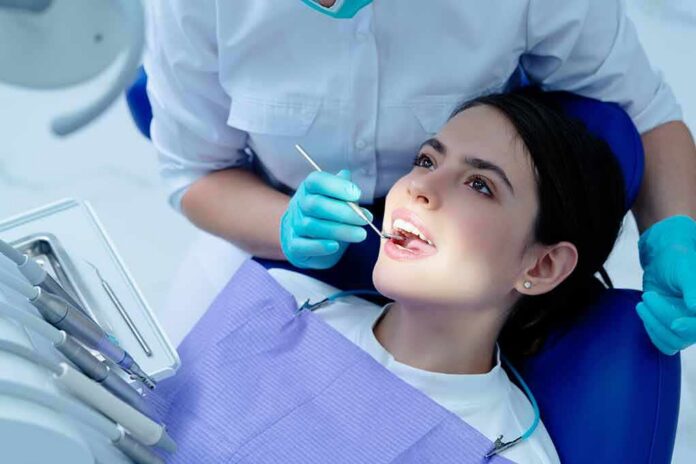
Millions of people grind their teeth every night and never know it until a dentist spots the damage.
Quick Take
- Sleep bruxism, or nighttime teeth grinding, often happens without the person ever waking up or noticing.
- Dentists can spot warning signs like worn teeth, jaw pain, and headaches even when patients never report grinding.
- Studies estimate roughly 8% to 16% of adults deal with sleep bruxism, depending on how it’s measured.
- Left unchecked, grinding can crack teeth, wear down restorations, and strain the jaw joint over time.
A Hidden Habit That Shows Up In The Mirror
Sleep bruxism rarely announces itself. Most people find out from a spouse who hears grinding at 2 a.m., or from a dentist who notices flattened, chipped, or unusually worn teeth during a checkup. The American Academy of Oral Medicine says morning jaw soreness paired with heavy tooth wear or bulky jaw muscles is a strong clue something is happening overnight, even without a single memory of it.
That disconnect between what patients feel and what dentists see is the whole problem. A person can sleep eight peaceful hours and still clench with enough force to damage enamel. The body does the work. The brain just doesn’t get a memo.
What Dentists Actually Look For
Clinicians don’t need a confession to suspect bruxism. A review of diagnostic methods lists abnormal tooth wear, jaw muscle fatigue after waking, temple-area headaches, and a jaw that locks or clicks as common red flags. Federal health researchers add that untreated grinding can wreck dental work, strain the jaw joint, and limit how wide a person can open their mouth without discomfort.
Those signs matter because they catch damage early, before a cracked molar turns into a root canal. But dentists are careful to note that tooth wear alone isn’t a smoking gun. Acid erosion, a rough diet, and daytime clenching can all leave similar marks, so wear supports a suspicion rather than proving it outright.
How Common Is It, Really
Numbers vary depending on how researchers measure the problem. A 2024 review of more than 2,000 adults put sleep bruxism prevalence around 8%, while an older systematic review found a higher figure near 12%. Other estimates stretch as high as 16% depending on whether researchers relied on questionnaires, bed-partner reports, or sleep-lab monitoring.
That spread isn’t a red flag about the research. It reflects a simple truth: a quick survey question catches different people than an overnight sleep study with electrodes attached to the jaw. Self-report tends to miss milder cases. Lab equipment catches almost everything but isn’t practical for routine checkups.
Why Precision Still Matters For Treatment
Truly nailing down bruxism with certainty requires tools most dental offices don’t use day to day, like electromyography that tracks jaw muscle activity through the night. Routine care instead relies on patient history, a visual exam, and sometimes a trial nightguard to see if symptoms ease. That approach works well enough to protect teeth, even if it falls short of lab-grade proof.
This is good news for anyone worried about overdiagnosis. Dentists aren’t guessing wildly. They’re reading a pattern of evidence, built from decades of clinical experience, and acting before a bad habit turns into an expensive repair bill. A nightguard is a small price next to a shattered molar.
The Bottom Line For Your Next Checkup
Dental and jaw damage from grinding can pile up quietly, which is exactly why regular checkups still matter even when nothing seems wrong. Morning jaw soreness, unexplained headaches, or a partner complaining about noise at night are all worth mentioning at your next appointment. Catching it early means protecting teeth you’ll need for the rest of your life.
😣 Jaw stiffness, headaches, or nighttime teeth grinding? These may be signs of TMJ-related concerns or bruxism. Get a professional evaluation at GB Dentistry.https://t.co/NyiUztGDW5#TMJRelief #BruxismTreatment pic.twitter.com/q5a8VBtMs6
— GB Dentistry (@gbdentistry) November 16, 2026
None of this requires panic. It requires attention. A five-minute conversation with a dentist about jaw tension or tooth wear costs nothing and can save thousands of dollars in restorative work down the road.
Sources:
wellness.com, sleepmedres.org, ncbi.nlm.nih.gov, aaom.com, cdeworld.com