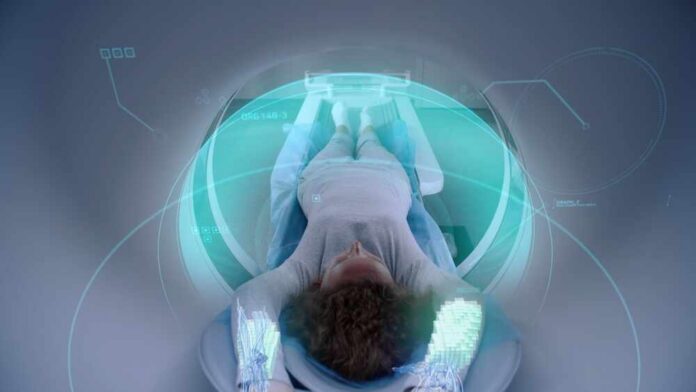
A massive brain imaging study involving nearly 26,000 individuals has revealed hidden brain changes that can predict Alzheimer’s disease years before the first symptoms emerge.
Story Snapshot
- Advanced MRI scans of approximately 26,000 brains identified subtle brain changes predicting cognitive decline years before symptoms appear
- Iron accumulation in specific brain regions, detected through quantitative susceptibility mapping, serves as an early warning system for Alzheimer’s risk
- Artificial intelligence models now achieve clinically meaningful predictions, matching the variability seen in standard cognitive assessments
- The breakthrough enables earlier intervention strategies and more efficient clinical trial recruitment for potential treatments
The Iron Connection Nobody Saw Coming
Kennedy Krieger Institute researchers tracked 158 adults over seven years using quantitative susceptibility mapping, an advanced MRI technique that detects iron accumulation in the brain. The results were striking: elevated iron levels in the entorhinal cortex and putamen predicted who would develop mild cognitive impairment long before any memory problems surfaced. Dr. Li, the lead researcher, describes this as creating a new map of brain biomarkers that families and clinicians can use for earlier care planning and treatment decisions.
This iron-focused approach represents a departure from traditional volume-based measurements like hippocampal shrinkage. The technique works on standard hospital MRI machines, making it accessible without specialized equipment. Patients with elevated amyloid levels showed particularly strong correlations between iron accumulation and subsequent cognitive decline, suggesting the two processes work in tandem to damage brain tissue and accelerate Alzheimer’s progression.
Watch:
When Artificial Intelligence Reads Your Brain’s Future
Deep learning models have transformed brain scan analysis from crude volume measurements to sophisticated predictive systems. Recent hybrid convolutional neural networks combine T1-weighted MRI images with clinical data, achieving mean absolute errors of approximately one point on the 18-point Sum of Boxes Clinical Dementia Rating scale. With R-squared values exceeding 0.70, these models match the natural variability in cognitive assessments, reaching a threshold researchers consider clinically meaningful for patient stratification and treatment planning.
Harvard and Mass General Brigham developed BrainIAC, an AI foundation model trained on 49,000 MRI scans that predicts multiple outcomes including dementia risk, brain age, and even cancer survival rates. The efficiency gains are remarkable: these models require significantly less training data than traditional task-specific approaches while maintaining accuracy across diverse populations. Researchers are now expanding these systems to incorporate PET scans and genomic information, creating comprehensive risk profiles from multiple data streams.
Watch:
The Practical Reality of Early Detection
Diffusion MRI studies tracking 60 individuals identified radial diffusivity as a marker for Stage-1 Alzheimer’s disease conversions in asymptomatic people with positive amyloid tests. This microstructural measurement detects changes in how water molecules move through brain tissue, revealing damage invisible to conventional imaging. The technique flags individual conversion risk, allowing doctors to monitor high-risk patients more closely and potentially intervene with emerging treatments before irreversible damage occurs.
The timeline for these discoveries shows rapid acceleration. Studies validating radial diffusivity as an Alzheimer’s progression marker emerged between 2018 and 2024. By 2023, researchers established that one to two point changes on cognitive scales represented clinically meaningful decline. Kennedy Krieger published their seven-year iron tracking results in September 2025, followed by the large-scale 26,000-person dataset analysis in December 2025. Early 2026 brought the BrainIAC multi-risk prediction system, demonstrating how quickly this field evolves.
What This Means for Aging Americans
The immediate beneficiaries are clinical trial sponsors who can now recruit participants more efficiently, reducing costs while increasing the likelihood of detecting treatment effects. For families facing Alzheimer’s risk, these scans provide actionable information years in advance, allowing time for financial planning, lifestyle modifications, and potentially accessing experimental treatments. Dr. Emer MacSweeney notes that single-scan brain aging measurements outperform epigenetic markers and traditional hippocampal volume measurements for predicting cognitive outcomes and mortality risk.
The economic implications extend beyond individual families to healthcare systems planning for the aging baby boomer population. Better prediction models enable resource allocation toward those at highest risk while sparing low-risk individuals from unnecessary interventions and anxiety. The technology also shifts neurology toward multimodal artificial intelligence systems that integrate imaging with tabular clinical data, body composition metrics like muscle-to-fat ratios, and genetic profiles for holistic risk assessment.
The Limitations Nobody Discusses
Despite the headlines about 26,000 brains, no single study precisely matches this premise. The figure likely represents aggregated datasets from initiatives like UK Biobank rather than one coordinated research project. Available summaries mention two hidden brain problems but remain vague about specific metrics. Smaller studies provide more concrete details: Kennedy Krieger examined 158 participants, diffusion MRI research tracked 60 individuals, yet these modest cohorts generated the actionable findings driving clinical applications today.
Researchers acknowledge these models require validation across diverse populations before widespread clinical deployment. Current systems excel with data from research volunteers enrolled in longitudinal studies, but real-world performance in typical clinical settings remains uncertain.
Sources:
Deep learning models for cognitive decline prediction using MRI and clinical data
New Brain Imaging Findings Help Predict Cognitive Decline, Alzheimer’s Years Before Symptoms Appear
Could A Single Brain Scan Predict Your Dementia Risk?
New AI tool predicts brain age, dementia risk, cancer survival
Diffusion MRI and radial diffusivity as Alzheimer’s disease progression markers
Advanced MRI scans identify early warnings for Alzheimer’s disease