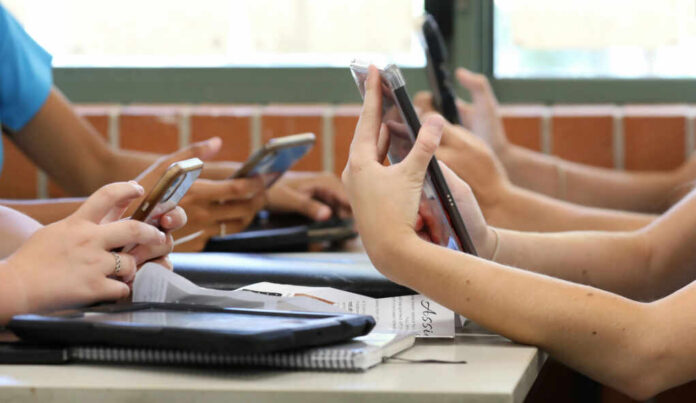
Every time a vulnerable girl pauses on a video about cutting calories or cutting her skin, an invisible machine decides what she will see next—and for many with additional needs, that next click is where the real damage begins.
Story Snapshot
- Girls with special educational needs or mental health problems face sharper risks from social media’s “for you” feeds than their peers.
- Recommendation algorithms reward obsession, comparison, and extremes—the exact triggers that destabilize vulnerable girls.
- Clinicians see rising anxiety, depression, isolation, and body-image distress tied to heavy social media use.
How algorithmic feeds collide with vulnerable girls’ real lives
Girls with additional needs often come to social media already carrying anxiety, depression, learning differences, or disabilities that make real-world friendships harder to sustain. Research on children and teens shows that heavy use—more than three hours a day—correlates with higher risk of anxiety and depression, which disproportionately hits those who were struggling to begin with.[1][6] For a girl who already feels “behind” her peers socially or academically, the phone becomes both lifeline and landmine.
Parents of neurodivergent or disabled teens describe social platforms as the main place their daughters find like-minded friends, special interests, and support.[3][7] Yet the same feeds can repeatedly expose them to bullying, exclusion, and humiliation, which hits especially hard when offline life is already lonely.[5][7] That combination—high need for connection plus low resilience to cruelty—creates exactly the kind of user profile that engagement-driven systems can inadvertently exploit.
Why recommendation engines are not neutral for this group
Modern feeds do not simply show what friends post; they predict what will keep a user’s eyes locked on the screen. Internal and independent analyses show that platforms such as TikTok and others rapidly learn which themes prolong viewing, then over-serve similar clips, including extreme dieting, self-harm, and sexualized minors.[1][6] When a vulnerable girl lingers on a body-checking video or a despairing confession, the system interprets that attention as a green light to send more of the same.
Clinicians and researchers describe how these algorithmic “rabbit holes” are built around emotionally charged, comparison-heavy content.[3][6] Feeds filled with idealized bodies, filtered faces, and social highlight reels fuel envy and erode self-worth, especially in girls already sensitive to social rejection or appearance-based judgment.[2][6]
Girls with additional needs: higher stakes, thinner margin for error
Neurodivergent youth and those with disabilities often misread social cues and struggle to judge trustworthiness online.[5][7] Pediatric guidance warns that even small missteps—sharing the wrong photo, trusting the wrong “friend”—can trigger intense social isolation and cyberbullying for these teens.[5][7] A mainstream teen might shrug off a nasty comment; a girl with fragile self-esteem or autism may obsess over it for days, while the algorithm rewards her repeated checking with more drama-filled content.
Studies of teens with disabilities find the same pattern: social media offers real benefits but carries outsized risks, including cyberbullying, loss of privacy, and problematic, compulsive use.[7] When parents post intimate details of their child’s disability, some disability advocates report that the child’s privacy and dignity are routinely violated online. That creates a double exposure: vulnerable girls are both subjects of oversharing and targets in spaces where their difference becomes entertainment.
What the evidence shows—and what it does not
Public-health authorities are blunt: children and adolescents who spend more than three hours a day on social media face roughly double the risk of mental health problems, including symptoms of depression and anxiety.[4][6] The United States Surgeon General states that current evidence does not allow anyone to claim social media is “safe” for youth, especially when large numbers report that it worsens body image.[4][6] These are associations, not courtroom-ready proof, but they should matter to any parent or policymaker.
At the same time, researchers admit they cannot neatly separate “algorithm harm” from broader social media harm.[5] Most studies track overall use, not the incremental impact of a recommendation engine on a girl with special educational needs. That uncertainty cuts two ways. It undercuts sweeping, sensational claims, but it also undermines tech-industry assurances that their ranking systems are harmless. When a product touches almost every child and the causal picture is cloudy, prudence says err on the side of the child, not the company.
Practical safeguards that respect families and freedom
Families do not need to wait for Congress or a new task force to act. Health organizations recommend limits on daily social media time, active monitoring of feeds, and explicit coaching about body image, bullying, and self-harm content.[1][6] For girls with additional needs, that often means sitting beside them while they scroll, unfollowing triggering accounts together, and teaching them to pause before engaging with content that feeds obsessive thoughts.
Girls with additional needs ‘at significant risk from social media algorithms’
Exclusive: Girls with additional needs including special educational needs and mental health problems risk being sucked into a ‘cycle’ of harmful online content, report warnshttps://t.co/cs3wvBFesC— dave lawrence 🐟🐟🐠 (@dave43law) June 3, 2026
The most effective line of defense is still a strong parent–child relationship, not a regulatory bureaucracy. Policymakers can support that by enforcing age verification, demanding transparency around youth-harm metrics, and requiring platforms to share safety data with independent researchers.[4] But no statute can substitute for a parent willing to say “no,” take the phone at night, and protect a vulnerable daughter from a machine that never gets tired of tempting her back.
Sources:
[1] Web – Girls with additional needs ‘at significant risk from social media …
[2] Web – Kids and Social Media – The Kids Mental Health Foundation
[3] Web – Girls, Health, and Digital Media – Children and Screens
[4] Web – Exploring parental use of social media among autism spectrum …
[5] Web – Social Media Use and Autism – Teens and Adults
[6] Web – Supporting Neurodivergent Youth in Navigating Technology … – AAP
[7] Web – Social Media and Mental Health in Children and Teens