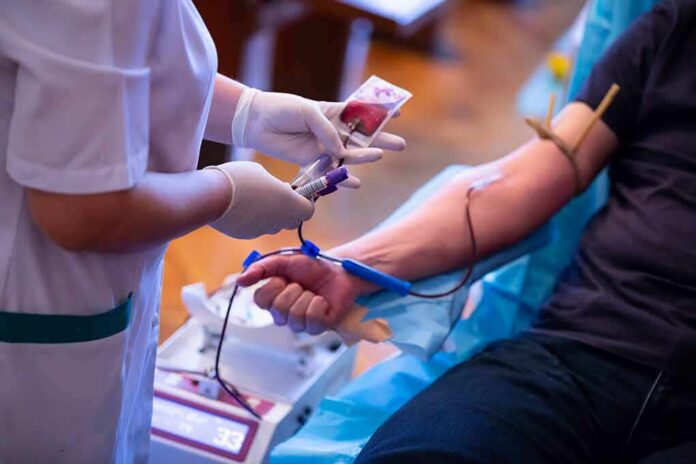
A simple blood test might tell doctors you’re losing muscle years before you ever feel weak.
Quick Take
- A four-year study of 1,370 older adults found a protein called Tsukushi in the blood linked to lower risk of sarcopenia, the medical term for serious age-related muscle loss.
- Adults with higher baseline levels of the protein had a 36% lower chance of developing sarcopenia over the study period.
- Researchers used grip strength, walking speed, and muscle measurements, not just blood numbers, to track the decline.
- The study was observational, done at one center in China, and experts say it needs to be tested in other groups before doctors can rely on it.
What The Study Actually Found
Scientists tracked 1,370 community-dwelling adults age 65 and older for four years. At the start, they measured a blood protein called Tsukushi using a standard lab test. Those with higher levels at baseline had a much lower chance of developing sarcopenia later, the condition where muscle mass, strength, and function fade with age.
The numbers tell a clear story. Each standard-deviation rise in Tsukushi matched a 36% drop in sarcopenia risk, with a statistically strong result unlikely to be chance. Researchers didn’t just compare two simple groups. They used advanced statistical models that adjusted for other health factors, strengthening confidence in the link between this protein and muscle health.
Importantly, the study didn’t stop at blood numbers. Researchers also measured real-world muscle function, including hand grip strength and walking speed. Lower Tsukushi levels lined up with declines in these physical measures too, suggesting the protein may reflect broader muscle health, not just a lab value sitting on a chart.
Why This Matters For Aging Americans
Muscle loss isn’t just a cosmetic worry. It drives falls, hospital stays, and loss of independence for older Americans. A blood marker that flags risk early could let doctors and patients act sooner, through exercise, nutrition, or other interventions, before serious decline sets in. That’s the appeal driving interest in this finding.
Still, the science here measures an association, not a guarantee. The study cannot prove that Tsukushi itself protects muscles. It’s possible the protein simply reflects better overall metabolic health, with muscle preservation coming along as a side effect rather than a direct cause. That distinction matters for anyone tempted to treat this as a magic number.
The predictive power of Tsukushi alone also lands in moderate territory. Researchers reported an area-under-the-curve score of 0.700, a statistic measuring how well a test tells people apart. That’s meaningfully better than a coin flip, but it’s not a crystal ball for any single patient’s future. Other sarcopenia markers studied elsewhere land in a similar moderate range, suggesting no single blood test currently solves this problem on its own.
What Comes Next For This Research
The study population came entirely from Jiangsu Province in China, a detail the researchers themselves flagged as a limit on how far these results stretch to other populations. People unable to move independently, and those with cancer or severe organ disease, were excluded from the research, meaning the sickest and frailest older adults weren’t represented.
Scientists also noted the link between Tsukushi and sarcopenia appeared stronger in women than men, a wrinkle that demands further digging before anyone treats this as a one-size-fits-all signal. Replicating these findings in other countries, with larger and more diverse groups, stands as the next necessary step before this moves from research paper to doctor’s office tool.
Common sense says promising lab findings deserve a healthy dose of patience before they turn into commercial tests or supplement marketing claims. History is full of biomarkers that looked great in one study and fizzled under wider scrutiny. The responsible path forward means validating Tsukushi against existing muscle-health tools like grip strength and lean-mass scans, not rushing it to market on the strength of one Chinese cohort.
For now, older Americans worried about muscle loss still have the basics working in their favor: resistance exercise, adequate protein intake, and regular physical activity remain proven ways to protect strength and mobility with age. A blood test for Tsukushi may one day add a useful early-warning signal. It isn’t there yet, and honest reporting on the science should say so plainly.
Research like this reminds readers that good science moves slowly and deliberately, built on replication and scrutiny rather than headlines alone. That patience protects patients from false hope and wasted money, a principle worth defending as more biomarker stories like this one hit the news cycle in the years ahead.
Sources:
mindbodygreen.com, agingresearch.news, pmc.ncbi.nlm.nih.gov, bioengineer.org