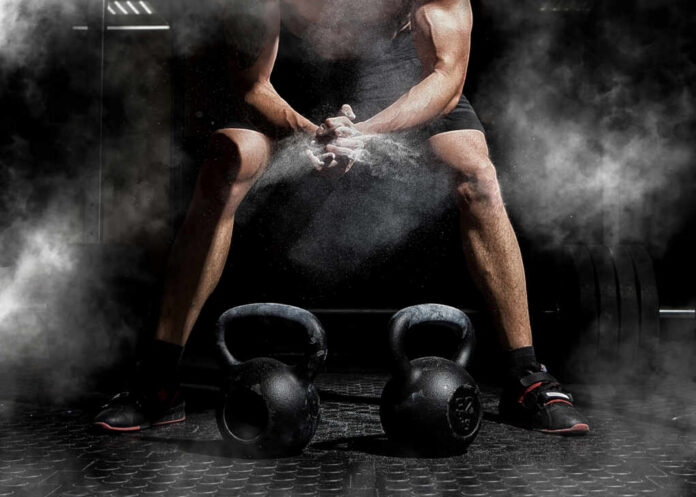
The kettlebell swing might be the most butchered exercise in your gym, turning what should be an explosive power builder into a recipe for lower back pain and wasted effort.
Story Snapshot
- Kettlebell swings are a hip hinge movement powered by glute explosion, not a squat or arm-driven lift
- The exercise originated from 18th-century Russian military training and was popularized in the West by Pavel Tsatsouline in the early 2000s
- Common mistakes include squatting instead of hinging, using the lower back for power, and pulling with the arms
- Proper form requires a rigid torso moving between a standing plank and tabletop back position with momentum-driven bell height
- Experts now emphasize individualized technique based on anatomy rather than one-size-fits-all instruction
The Russian Secret Nobody Gets Right
The kettlebell swing descends from 18th-century Russian military conditioning with girya, those cannonball-shaped weights forged for building strength endurance in soldiers. Pavel Tsatsouline, the StrongFirst founder who brought kettlebells to Western gyms in the early 2000s, transformed this ancient tool into a modern powerhouse movement. Yet despite two decades of instruction, most people still swing kettlebells like they’re conducting an orchestra with a cannonball. The fundamental error? Treating it like a squat when it demands a hip hinge, transforming explosive posterior chain power into a lower back catastrophe waiting to happen.
Why Your Swing Looks Nothing Like It Should
The kettlebell swing explodes from your glutes, period. Your arms function as ropes connecting your hips to the bell, nothing more. The movement launches from a tabletop back position where your torso stays rigid like a plank tilted forward at the hips, not bent at the waist. When your glutes fire, they snap your hips forward violently, propelling the bell upward through pure momentum. Your body reaches a standing plank at the top, glutes squeezed tight, before gravity brings the bell back down and you hinge again to reload the next rep.
Men’s Health instructors hammer home the cue that separates amateurs from athletes: your body doesn’t follow the bell upward. The bell follows your hip explosion. If you’re pulling with your arms or lifting with your shoulders, you’ve missed the entire point. StrongFirst takes this further, emphasizing that shoulders should align above hips, which align above knees in the bottom position. The sequence flows rhythmically, coordinated with breathing patterns that turn mechanical repetitions into a ballistic dance of power generation.
The Foam Roller Test That Exposes Your Weakness
Place a foam roller directly behind your calves and perform your swing. If you hit it, you’re squatting instead of hinging. This simple diagnostic reveals the most pervasive error plaguing gym floors everywhere. A proper hip hinge keeps your shins relatively vertical while your hips drive backward, loading the hamstrings and glutes like a coiled spring. Squatting shifts the load to your quads and eliminates the ballistic hip snap that makes swings effective for building explosive power and metabolic conditioning.
ACE-certified trainer Pete McCall drives home additional form essentials: grip the handle tight, maintain a long spine from head to tailbone, and let momentum dictate how high the bell rises. Forcing the bell higher with arm strength defeats the purpose and increases injury risk. StrongFirst’s recent emphasis on individualization acknowledges that your perfect swing depends on your skeletal structure. Some lifters generate more power with slightly more knee bend, while others need different shin angles. The principle remains constant even as the details adjust to your anatomy.
What Proper Form Actually Delivers
Execute kettlebell swings correctly and you build explosive hip power that transfers to sprinting, jumping, and real-world athleticism. The posterior chain development strengthens glutes and hamstrings while the metabolic demand torches calories during and after your workout. Mess up the form and you’re courting lumbar strain, shoulder impingement, and the frustration of working hard while getting nowhere. The 2000s CrossFit boom flooded gyms with enthusiastic swingers who learned from watching instead of proper instruction, leading to injury reports that prompted the detailed corrections now standard in fitness media.
The current consensus among certified instructors remains stable: hip hinge dominates, glutes provide the explosion, arms stay passive, and spine stays neutral. Minor debates persist about shin angles and how much knee bend optimizes power for different body types, but no credible authority endorses squatting, back-driven swings, or arm pulling. As of 2026, the technique refinements focus on breathing rhythm, individualized anatomical adjustments, and diagnostic tools like air swings performed without weight to groove the pattern before adding load.
The kettlebell swing rewards those who respect its Russian military roots by demanding discipline over ego. Master the hip hinge, trust your glutes to generate power, and let the bell swing itself through momentum rather than muscling it upward. This approach transforms a simple iron ball into a tool that builds the explosive strength your body actually uses outside the gym, from hoisting luggage into overhead bins to keeping up with grandchildren who never seem to run out of energy.
Sources:
How to Do a Kettlebell Swing the Right Way – Men’s Health
Is There a Perfect Swing or the Quest? – StrongFirst