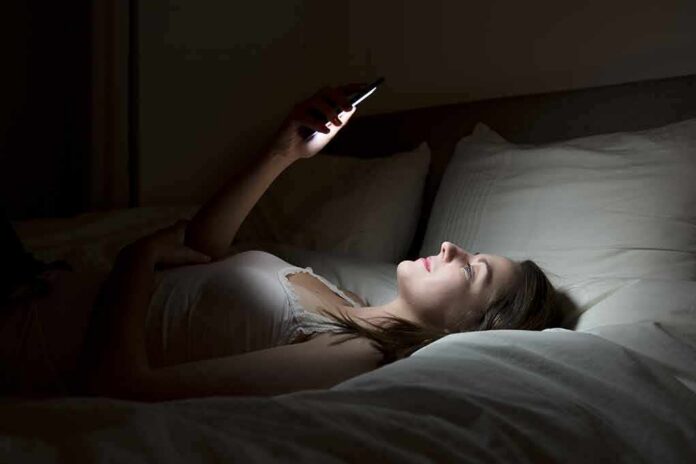
Night owls now have a new reason to rethink that midnight scroll session, because a massive new study just tied late-night living to a higher risk of heart attack and stroke.
Story Snapshot
- A study of 322,777 people found self-described evening types had a 79% higher rate of poor cardiovascular health.
- The same group faced a 16% higher risk of heart attack or stroke over about 14 years.
- Blood tests link late-night habits to proteins tied to insulin resistance and metabolic trouble.
- Top researchers say the evidence shows a connection, not proof that late nights directly cause disease.
The Numbers Behind The Warning
Researchers tracked over 300,000 adults through the UK Biobank database for roughly 14 years. People who called themselves “definite evening types” showed a 79% higher chance of having poor cardiovascular health markers compared to early risers. Their risk of an actual heart attack or stroke ran 16% higher over that same stretch. The size of the study group makes this one of the most detailed looks yet at how sleep timing connects to heart disease.
The link held up even after scientists adjusted for income, job type, shift work, and family history of heart disease. Night owls still showed a 16% higher risk compared to people with an average sleep schedule. But the same analysis found that healthy habits like diet, exercise, blood sugar control, and sleep quality accounted for about 74% of that extra risk. That detail matters, because it means lifestyle choices, not just a late bedtime, carry much of the weight.
How A Late Bedtime May Strain The Body
Scientists in Sweden tested blood samples from over 2,400 adults and found evening types carried higher levels of proteins already tied to insulin resistance and heart disease. Two specific markers, a fatty acid-binding protein and a blood-clotting protein called PAI-1, showed up more often in people who stayed up late. These are the same biological warning signs doctors watch for in patients heading toward diabetes.
Other research backs up the insulin connection. A metabolic study found early risers processed sugar more efficiently and showed lower insulin resistance scores than late sleepers. A separate Swedish cohort study linked evening types to more sedentary time and a higher 10-year cardiovascular risk score, suggesting the clock in your body and the habits built around it move together.
Doctors Say Don’t Panic Over A Late Bedtime
Harvard researchers studied a similar question with diabetes and found evening types were 72% more likely to develop the disease before accounting for lifestyle factors. After adjusting for diet, exercise, and smoking, that number dropped to 19%. Harvard’s own writeup was blunt about what that means. “The study’s results point to associations but cannot determine causality,” the report stated, a reminder that correlation and causation are not the same thing.
The Endocrine Society struck a similar tone when covering related night-owl research. Their statement cut straight to the point: “The study does not prove that habitually staying up late is bad for your health… only that there appears to be an association between greater health risks and being a night owl.” That distinction matters for anyone reading headlines and assuming their bedtime alone decides their fate.
What This Means For Anyone Who Stays Up Late
The honest takeaway here isn’t that night owls are doomed. It’s that late nights tend to travel with a pack of other habits, skipped workouts, irregular meals, poor sleep, that genuinely hurt the heart. Blaming a body clock alone lets people off the hook for choices they can actually control. Eating well, moving daily, and protecting real sleep time matter more than what hour you finally turn off the lights.
Personal responsibility still beats fatalism here. Nobody can flip their internal clock overnight, but everybody can choose what they eat at 11 p.m. or whether they walk the dog before bed. The data gives a nudge toward better habits, not an excuse to assume genetics have already sealed the deal. That’s a message worth keeping in mind before trading in the night-owl label for a victim card.
Sources:
mindbodygreen.com, pmc.ncbi.nlm.nih.gov, academic.oup.com, pubmed.ncbi.nlm.nih.gov, medscape.com