Scientists just solved a problem that has plagued organ transplantation for over a century: how to freeze organs without destroying them with ice crystals, potentially transforming transplants from a race against the clock into a scheduled procedure.
Quick Take
- Texas A&M researchers discovered that higher glass transition temperatures in vitrification solutions dramatically reduce organ cracking during freezing
- Current organ preservation limits organs to 4-16 hours on ice; this breakthrough targets indefinite storage at sub-zero temperatures
- The discovery addresses the core physics problem that prevented large organs from surviving the freeze-thaw cycle for over 100 years
- Long-term implications include organ banking, eliminated transplant waitlists, and billions in healthcare savings
The Century-Old Barrier That Just Cracked
For more than 100 years, organ transplantation has operated under a brutal constraint: donate organs remain viable for only hours. Surgeons harvest a kidney or liver, place it on ice, and race against biological decay. Miss the window, and the organ becomes unusable. This time crunch kills thousands annually and forces geographic accidents to determine who receives life-saving transplants. The fundamental problem was ice itself. Below freezing, water crystallizes, rupturing cell membranes and rendering organs beyond repair.
How Scientists Engineered Around Nature’s Ice Problem
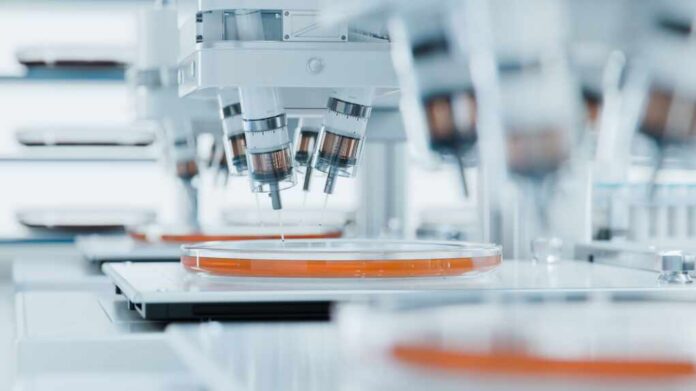
Enter vitrification, a freezing technique that bypasses ice crystal formation entirely by turning tissue into a glass-like solid state. Researchers submerge organs in special chemical solutions called cryoprotective agents, then cool them rapidly to extreme temperatures. The tissue becomes frozen but maintains its cellular structure intact. The catch: rapid cooling caused the organ to crack under thermal stress, like a windshield shattering in winter. For decades, this cracking problem seemed insurmountable, particularly for large organs like hearts and livers.
Dr. Matthew Powell-Palm and his team at Texas A&M’s Department of Mechanical Engineering identified the culprit: glass transition temperature, a material property that determines how a substance behaves during freezing. By adjusting the chemical composition of vitrification solutions to achieve higher glass transition temperatures, Powell-Palm discovered that organs resist cracking dramatically. Higher temperatures mean the tissue transitions to its glass state more gradually, distributing thermal stress evenly rather than creating fracture points. The insight was elegant in its simplicity: the problem wasn’t the freezing itself but how fast and unevenly it happened.
From Laboratory Discovery to Clinical Reality
The implications ripple across medicine and society. Short-term, this breakthrough enables research teams to preserve organs beyond the current 16-hour window, testing new surgical techniques and drug interactions on fresh tissue. Long-term, organ banking becomes possible. Surgeons could maintain inventories of frozen organs, matching them to recipients based on compatibility rather than geographic proximity and time pressure. A patient in rural Montana could receive a kidney preserved for weeks, not hours. The transplant crisis affecting roughly 100,000 Americans on waiting lists transforms from a logistics nightmare into a manageable supply chain problem.
Complementary technologies accelerate this vision. Researchers at the University of Minnesota developed nanowarming, infusing organs with magnetic nanoparticles that thaw tissue uniformly when exposed to oscillating magnetic fields, preventing ice reformation during revival. Teams at UTMB successfully stored rat kidneys for up to 100 days, then transplanted them with full function restored. These advances stack atop one another, each solving a different piece of the preservation puzzle.
The Economics and Ethics of Frozen Organs
The financial impact dwarfs typical medical breakthroughs. Current organ procurement costs billions annually due to rushed logistics, helicopter transport, and surgical coordination across time zones. Organ banking eliminates these inefficiencies. More profoundly, it addresses equity. Transplant access currently depends on geography and luck. A wealthy patient in a major city receives organs faster than a patient in a rural area. Frozen organ banks could democratize access, ensuring that zip code doesn’t determine whether someone lives or dies. The National Science Foundation and industry partners recognize this potential, funding biopreservation research as a public health priority.
Yet challenges remain. Vitrification solutions must prove biocompatible with human tissue at scale, not just in laboratory rat models. Regulatory pathways for frozen organ banking don’t yet exist. Clinical trials haven’t begun. The Texas A&M team’s September 2025 publication marks a crucial waypoint, not the finish line. Powell-Palm and colleagues now focus on engineering solutions with higher glass transition temperatures that don’t damage living cells. Success requires chemistry as much as physics.
Why This Matters Now
Organ transplantation represents medicine’s highest stakes. A successful transplant grants years of life to someone facing certain death. Yet the current system wastes viable organs daily because preservation time runs out. Powell-Palm’s discovery attacks this waste at the molecular level, addressing a constraint that seemed permanent. When the team publishes follow-up research on biocompatible high-transition-temperature solutions, expect acceleration toward clinical trials. Within five to ten years, frozen organ banks could transition from science fiction to standard hospital infrastructure, fundamentally reshaping transplantation medicine and saving thousands of lives annually.
Sources:
Texas A&M researchers pioneer cryopreservation method to prevent organ cracking
A 100-Year-Old Problem Solved: Scientists Discover How to Freeze Organs Without Cracking Them
Keeping organs for transplantation on the shelf
Biopreservation Material Could End the Wait for Organ Transplants
Freezing time for organ transplantation
How to deep freeze an entire organ—and bring it back to life