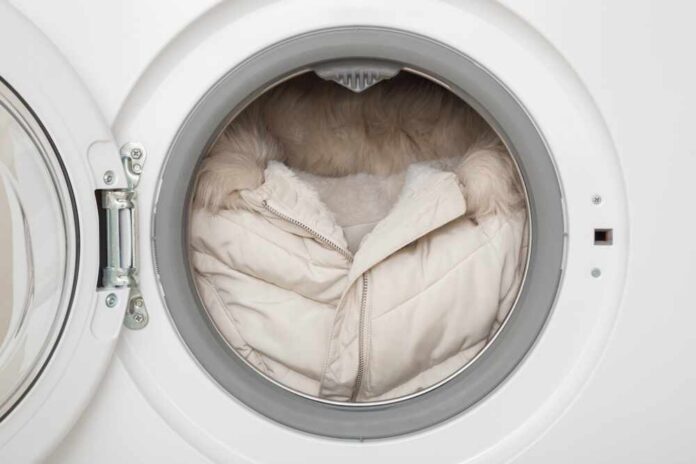
While Washington wastes billions on frivolous programs, hardworking Americans can save hundreds of dollars each year by learning to properly maintain their winter coats at home—extending garment life and rejecting the dependency culture that pushes outsourcing every task to expensive professionals.
Story Highlights
- Proper DIY washing can extend winter coat life by 1-2 seasons, saving families $100+ annually in dry cleaning costs
- Expert guidance emphasizes self-reliance through simple methods: cold water, mild detergent, and tennis balls for drying puffers
- Common consumer errors like hot-water washing cause 20-30% insulation failure, making label adherence critical
- Sustainable home maintenance reduces textile waste and chemical runoff while promoting traditional values of resourcefulness
Reclaiming Self-Sufficiency in Coat Care
Americans have grown increasingly dependent on service industries for basic household tasks, driving up costs and diminishing practical skills once passed down through generations. Winter coat maintenance exemplifies this trend, with many families routinely spending $20-50 per garment on dry cleaning when simple home washing suffices. Kim Romine, fabric care scientist at Procter & Gamble, confirms that most modern puffers, parkas, and synthetic coats can be washed at home using lukewarm water, mild detergent, and a 10-15 minute soak. This approach restores warmth, prevents mildew, and eliminates accumulated road salt and grime without professional intervention, aligning with conservative principles of self-reliance and fiscal responsibility.
Material-Specific Methods for Optimal Results
Different coat materials demand tailored approaches, contradicting one-size-fits-all government-style solutions. Down and synthetic puffer jackets tolerate machine washing on gentle cycles with cold water, but fabric softeners and bleach must be avoided to preserve insulation loft. Experts universally recommend adding tennis balls to the dryer on low heat, breaking up clumps and restoring the jacket’s original puffiness. Wool coats, conversely, require professional dry cleaning to prevent felting and shrinkage—a distinction overlooked in generic advice. RefrigiWear suggests washing work coats every 2-3 weeks for heavy use, followed by air drying to maintain durability. These nuanced methods require consumers to read care labels carefully, rejecting the lazy shortcuts promoted by disposable consumer culture.
Economic and Environmental Benefits of Home Maintenance
DIY coat cleaning delivers measurable financial advantages that compound over time, mirroring conservative arguments for reducing unnecessary spending. Families who wash coats at home cut seasonal dry cleaning bills by over $100, funds better allocated to savings or productive investments rather than recurring service fees. Proper care extends garment lifespan by 3-5 years, reducing textile landfill contributions and lowering demand for replacement purchases driven by preventable damage. This approach contradicts the environmental left’s complex regulatory schemes, instead empowering individuals through practical stewardship. The rise of eco-conscious consumerism in the 2010s and COVID-19 dry cleaner closures accelerated adoption of these methods, proving that crises often reveal the value of traditional self-sufficiency over dependency on external systems.
Expert Consensus on Simple, Proven Techniques
Industry professionals agree on core washing principles despite minor variations in water temperature recommendations, ranging from cold to warm below 104°F. Men’s Health’s 2025 update emphasizes spot-testing detergents on inconspicuous areas before full washing, preventing color damage or chemical reactions. Down-specific detergents are preferred for maintaining loft, while extra rinse cycles remove residual soap that can clump insulation. Credible sources consistently warn against common errors: hot water warps technical fabrics, fabric softeners coat fibers and reduce breathability, and insufficient drying leaves moisture that breeds mildew. These straightforward guidelines require no specialized equipment beyond what most households already own, undermining arguments that professional services are indispensable for routine maintenance tasks.
The contrast between DIY advocates and professional cleaners highlights broader cultural debates about competence and self-determination. While lifestyle media champions home washing as cost-effective and environmentally sound, some professional services promote dry cleaning for wool and down to minimize consumer risk. This tension reflects conflicting philosophies: one trusts individuals to follow clear instructions and accept responsibility for results, the other assumes incompetence requiring expert intervention. Conservative values favor the former, recognizing that American families possess the intelligence and work ethic to master basic maintenance tasks. The stability of washing advice across decades—verified through brand guides, expert interviews, and consumer testing—demonstrates that these methods work reliably when executed properly, rewarding careful attention over outsourcing.
Sources:
How to Wash Winter Coats: The Right Way to Clean Puffers, Parkas, and Wool – Men’s Health
How to Wash Your Winter Work Jacket – RefrigiWear
How to Wash a Down Jacket – She Dreams of Alpine
How to Clean and Care for Your Winter Coats: Expert Tips – A Cleaner World