Your brain may quietly be aging slower than your birth certificate says—if you are getting enough of one unglamorous mineral that women, especially after 50, often neglect.
Story Snapshot
- Higher daily magnesium intake tracks with “younger” brain structure and better thinking scores in large human studies.
- Women, particularly after menopause, appear to reap the strongest brain-aging benefit from higher magnesium intake.
- The evidence is promising but mostly observational, which means smart insurance policy, not magic cure.
How A Quiet Mineral Ended Up In The Brain-Aging Spotlight
Australian National University researchers followed more than 6,000 cognitively healthy adults in the United Kingdom, ages 40 to 73, and mapped magnesium intake against brain scans that estimate “brain age.” People consuming over about 550 milligrams of magnesium a day had brain scans that looked roughly one year younger by their mid-50s than those eating closer to 350 milligrams. The same analysis linked a roughly forty percent bump in magnesium intake with less age-related brain shrinkage, a structural change tied to dementia risk. [4]
The researchers reported a twist that should make women sit up: the apparent neuroprotection looked stronger in women than in men, and most of all in post-menopausal women. They suggested magnesium’s anti-inflammatory effects might intersect with hormonal shifts to influence brain resilience, though they did not claim to have fully proven that pathway. The headline they chose for the public—“a higher dose of magnesium each day keeps dementia at bay”—leaned aggressive, but their actual measurements were brain structure and estimated brain age, not dementia diagnoses. [4]
What American Data Say About Magnesium And Thinking Power
Researchers in the United States turned to the huge National Health and Nutrition Examination Survey and asked a simpler question: do older adults with higher total magnesium intake think more clearly? An analysis of Americans 60 and over found that those with higher overall magnesium intake performed better on standardized cognitive tests, even after the authors adjusted for age, education, and other health factors that normally drag scores up or down. They described this as an independent association between magnesium intake and better cognition. [2]
When the statisticians sliced the data into subgroups, the pattern seemed clearest in women, non-Hispanic White participants, and those whose vitamin D levels were in a healthy range. Then the statistical brakes kicked in. The formal interaction tests—the checks that ask “is this difference between groups real, or just noise?”—did not cross the significance threshold. The authors still highlighted the pattern but admitted that the sex and race differences might not be robust.
From Lab Bench To Kitchen Table: How Strong Is The Case?
The Alzheimer’s Drug Discovery Foundation reviewed the entire magnesium–brain landscape and counted one Cochrane meta-analysis, several additional reviews, four randomized controlled trials, nearly twenty observational studies, and a stack of laboratory findings. Put simply, the biological plausibility is not fantasy. Magnesium influences inflammation, blood vessel function, and the way brain cells handle energy and electrical signaling. Observational data repeatedly tie lower magnesium status to higher dementia risk and weaker cognition across later life. [5]
Yet the same review throws cold water on the more breathless claims. The authors state bluntly that, beyond correcting an actual deficiency, it is not clear whether extra magnesium provides further benefit. One small trial they summarize found that people over 65 who took magnesium glycinate for twelve weeks improved their Montreal Cognitive Assessment scores by about nine percent, while the placebo group did not budge. That is encouraging, but it is short term, with modest sample size, and still miles away from proving that magnesium supplements prevent dementia. [5][6]
Why Women, And Especially Post-Menopausal Women, Might Gain More
Several research groups now point in the same direction: women who eat more magnesium-rich foods tend to have brains that look and perform better as the decades add up. The Australian National University cohort hints at stronger structural benefits in post-menopausal women; the United States survey analysis finds its clearest cognitive associations among older women; and a Harvard clinical commentary notes that a 2023 study linked higher magnesium intake with better brain health “especially in women” as they age. [2][4][7]
None of this means magnesium is a secret estrogen replacement or a stand-alone dementia shield. A straighter reading is that women often face a convergence of brain stressors in midlife—hormonal change, sleep disruption, rising blood pressure, weight gain—and magnesium sits right at the crossroads of blood vessel health, inflammation, and nerve signaling. From a responsibility-first perspective, this is a textbook example of low-risk self-care: cover your basic nutrient needs with food, shore up a known vulnerability, and let your physician decide whether a supplement makes sense for your individual case.
How To Nudge Your Brain’s Clock Without Losing Your Head
Nutrition scientists, when they are honest, admit that magnesium studies are still mostly observational, which means they can reveal patterns but not prove that one extra handful of pumpkin seeds will keep you out of a memory clinic. At the same time, there is no rational argument for ignoring a mineral that most adults undershoot, that plays a central role in hundreds of enzymatic reactions, and that consistently associates with healthier aging brains. Food-first, evidence-aware action threads the needle between hype and fatalism. [2][4][5][6]
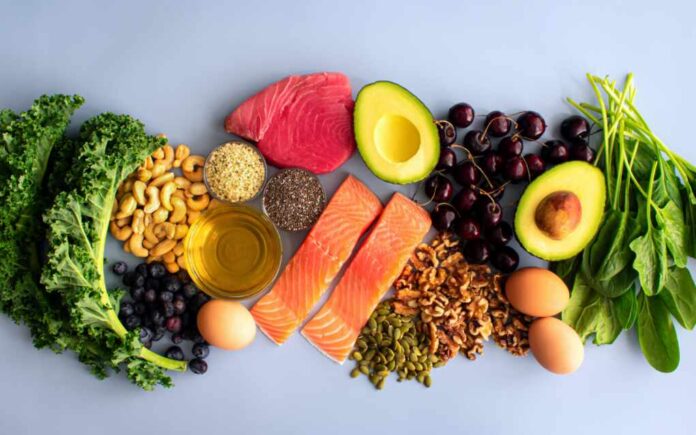
For daily life, that means building your plate around magnesium workhorses: leafy greens, beans, nuts, seeds, and whole grains. It means remembering that heavily processed, low-fiber convenience food quietly strips this mineral out of your diet. For women over 50, it also means asking a doctor to review medications, kidney function, and bloodwork before reaching for high-dose supplements. The goal is not to chase a miracle nutrient; it is to give your brain one more quiet advantage in the only direction that matters—staying sharp enough to live the life you actually want.
Sources:
[2] Web – Association between magnesium intake and cognition in US older …
[4] Web – A higher dose of magnesium each day keeps dementia at bay
[5] Web – [PDF] Magnesium: Cognitive Vitality for Researchers
[6] Web – Magnesium in Aging, Health and Diseases – PMC – NIH
[7] Web – Magnesium-rich foods might boost brain health, especially in women