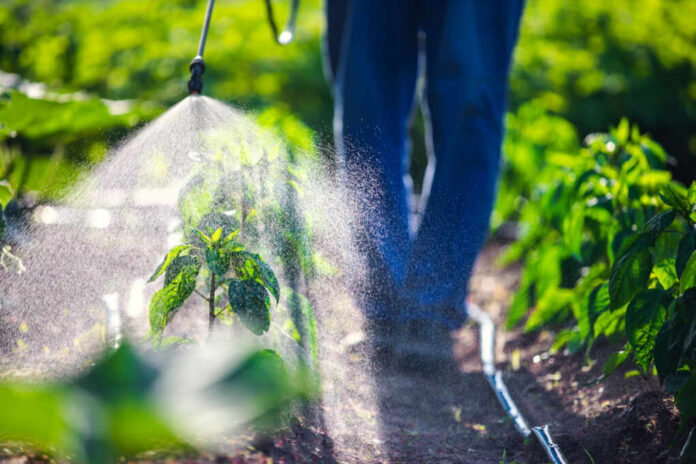
The unsettling part is not that glyphosate may hurt bacteria. It is that it may help the toughest ones survive, spread, and keep their defenses.
Quick Take
- A new peer-reviewed study links glyphosate resistance in bacteria with multidrug resistance in clinical strains.
- The strongest signal points to efflux pumps, which help bacteria push out harmful compounds.
- Hospital strains and environmental strains from an Argentine wetland showed a striking pattern of related resistance.
- The evidence is serious, but it is still a correlation study, not proof of real-world harm in patients.
Why This Weedkiller Story Matters
A study from Argentina has pushed an old chemical into a new debate: whether glyphosate, the active ingredient in many weedkillers, may help select for dangerous bacteria. The researchers tested bacteria from hospitals, farms, and a protected wetland, then compared how they handled glyphosate and antibiotics. Their core finding was sharp enough to raise eyebrows: the most drug-resistant hospital strains were also highly resistant to glyphosate.[8][9]
That does not mean glyphosate “creates” superbugs in a simple one-step way. It means the chemical may give an advantage to bacteria that already have broad defenses. The study says glyphosate exposure could favor bacteria linked to hospital infections and the rise of multidrug-resistant clinical strains. That is a narrow scientific claim, but it carries wide public meaning because it connects farm chemicals to hospital risk.[8][9]
What the Researchers Found
The strongest strains in the study did not come from one place alone. Bacteria from hospitals, agricultural soils, and the Paraná Delta wetland showed a resistance pattern that lined up more closely than many readers would expect. The environmental strains with the highest glyphosate resistance clustered near multidrug-resistant clinical strains on the family tree, which suggests shared traits rather than random overlap.[1][2][14]
The study also points to a likely mechanism: efflux pumps. These are bacterial “exit doors” that pump out harmful chemicals. The genomic analysis found that glyphosate-resistant multidrug-resistant strains carried more of these pumps, and the authors argued that this may help explain why glyphosate resistance and antibiotic resistance travel together.[6][7][8]
That detail matters because it gives the story a plausible biological route. If a bacterium already uses efflux pumps to survive one stress, it may gain an edge against another. The study does not prove glyphosate is the sole cause. But it does show a mechanism worth taking seriously, especially because the authors say the effect appeared in both clinical and environmental isolates.[8][9][16]
What the Study Does Not Prove
This is where caution earns its keep. The research compares existing strains. It does not track a field site over years to show that glyphosate spraying directly caused new antibiotic resistance in real time. It also does not give a clean dose-response map for the exact soil samples in each location. Those gaps do not erase the findings, but they do limit how far the conclusion can go.[8][9]
The study also focuses on Argentina. That makes it strong as a local case study and weaker as a global verdict. Bacteria vary by region. Herbicide use varies by region. Hospital practices vary too. So the result should be read as a warning signal, not a final answer for every country, every crop, or every bacterial family on earth.[1][2][17]
Sources:
[1] Web – One of the world’s most popular weedkillers may be fueling deadly …
[2] Web – One of the World’s Most Popular Weedkillers May Be Fueling Deadly …
[6] Web – Weedkiller may help ‘superbugs’ thrive, study suggests
[7] Web – Soils exposed to glyphosate might also be harbouring hospital …
[8] Web – Glyphosate resistance as a potential driver for the dissemination of …
[9] Web – Glyphosate resistance as a potential driver for the dissemination of …
[11] Web – Glyphosate, Roundup and the Failures of Regulatory Assessment
[14] Web – Exposure of agricultural soils to glyphosate-based weedkillers may …
[16] Web – Study ties use of weedkiller to drug-resistant bacteria – CIDRAP
[17] Web – Glyphosate and glyphosate-based herbicides (GBHs) induce …