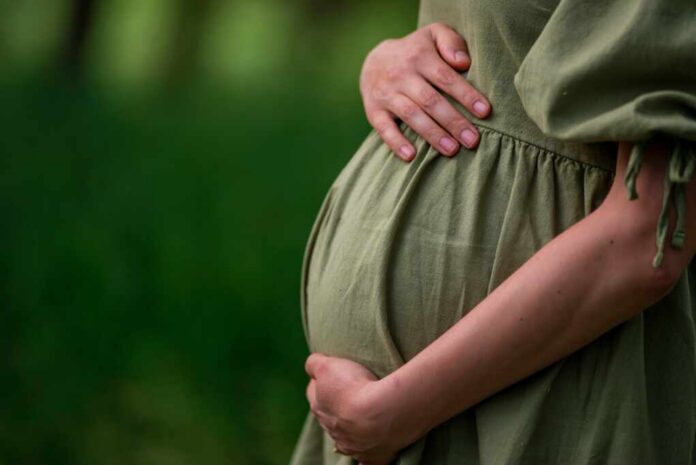
Bad sleep during pregnancy does not just make you tired — it may be quietly fueling the anxiety that makes everything feel impossible.
Quick Take
- Up to two-thirds of pregnant women experience poor sleep quality, and research links it directly to higher anxiety during and after pregnancy.
- Sleep and anxiety feed each other in a two-way loop — poor sleep raises anxiety, and anxiety makes sleep worse.
- Mid-pregnancy insomnia predicts not just postpartum anxiety, but also obsessive-compulsive symptoms and post-traumatic stress disorder symptoms after birth.
- Doctors now recommend screening pregnant women for both sleep problems and anxiety together, not one or the other.
The Two-Way Trap Most Pregnant Women Never Hear About
Most pregnant women expect to lose sleep. What they do not expect is that the lost sleep may be the thing making their anxiety spiral. Research shows this relationship runs in both directions. A study of 532 pregnant women found that shorter sleep duration predicted higher anxiety levels, and higher anxiety predicted sleep getting worse over time. [1] That is not a chicken-or-egg puzzle. That is a trap. And most women walk into it without anyone warning them.
The numbers behind this trap are hard to ignore. Roughly two-thirds of pregnant women report poor sleep quality, and a similar share report meaningful anxiety during pregnancy. [4] Those two groups overlap heavily. Poor sleep in late pregnancy is strongly tied to higher anxiety and depression symptoms, especially in women who already have risk factors. [3] The body is under enormous hormonal stress, physical discomfort is real, and the mind is racing about labor and a newborn. Sleep does not stand a chance without some deliberate help.
What Happens After the Baby Arrives Is the Part Nobody Warns You About
The story does not end at delivery. Women who sleep poorly during pregnancy carry that deficit straight into the postpartum period. Research shows that insomnia during pregnancy predicts higher general anxiety after birth, along with obsessive-compulsive disorder symptoms and post-traumatic stress disorder symptoms. [12] A separate study confirmed that poor sleep quality during pregnancy is tied to both visible and hidden postpartum anxiety. [5] Hidden anxiety is the kind women quietly suffer through while telling everyone they are fine.
Sleep disturbance hits somewhere between 60 and 80 percent of postpartum women. [13] That is not a fringe problem. That is nearly every new mother. And when you layer newborn care on top of a brain already worn down by months of broken pregnancy sleep, the conditions for a serious anxiety disorder are nearly perfect. Hormonal shifts after birth add more pressure. [15] The system is stacked against rest, and rest is exactly what the brain needs to regulate fear and worry.
Why Doctors Are Changing the Way They Screen for This
The research is pushing clinical practice in a clear direction. Pregnant women who report anxiety should now be screened for sleep problems, and women who report sleep problems should be screened for anxiety. [1] Treating only one side of the loop leaves the other side running. That is like fixing a leak on one end of a pipe while ignoring the crack on the other end. The water still goes where you do not want it.
Fear of childbirth also plays a role that often gets overlooked. Studies show that pregnancy-related anxiety and fear of labor independently predict worse sleep quality, even after accounting for other factors. [4] This matters because fear of childbirth is treatable. Targeted counseling and birth preparation programs can reduce it. If reducing that fear also improves sleep, and better sleep lowers anxiety, the upside of early intervention is significant. The case for treating these problems together — not separately — keeps getting stronger.
What This Means for Women Right Now
The science here is observational, meaning researchers see these patterns clearly but cannot yet prove one thing causes the other in every case. That honest caveat matters. But the pattern is consistent across multiple studies and populations. Waiting for perfect proof while millions of women suffer through anxious, sleepless pregnancies is not a reasonable response to the evidence. The bidirectional link between sleep and anxiety during pregnancy is real, it is well-documented, and it is actionable today.
Women should bring both issues to their doctor at the same time. If you are not sleeping well, say so. If you are anxious, say that too. Do not assume one is just a symptom of the other. They are likely feeding each other. Treating sleep as a serious health concern during pregnancy, not just an inconvenient side effect, is one of the most practical steps available to protect mental health before and after birth. [16] That conversation starts with being honest about how bad the nights actually are.
Sources:
[1] Web – Many Women Feel Anxious During Pregnancy & This May Be A Contributing …
[3] Web – Effects of sleep quality, anxiety, and depression on miscarriage …
[4] Web – Poor Sleep in Late Pregnancy Linked to Elevated Anxiety and …
[5] Web – Sleep quality during pregnancy: the role of anxiety, fear of …
[12] Web – Poor Sleep Quality Increases Symptoms of Depression and Anxiety …
[13] Web – Associations between sleep and circadian rhythm disruption and …
[15] Web – Pregnancy Insomnia Contributing to Postpartum Anxiety
[16] Web – Postpartum Anxiety: Symptoms, Diagnosis & Treatment