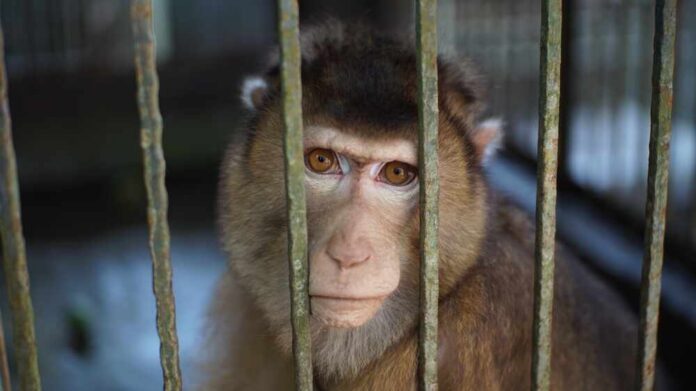
A new study of 500 primate teeth suggests that grooves scientists long called proof of ancient tooth-picking may have formed on their own — no stick required.
Quick Take
- Researchers found tooth grooves nearly identical to “toothpick grooves” in 27 wild primate species that never use toothpicks.
- The grooves likely form from chewing, diet, and natural wear — not deliberate oral hygiene.
- The finding challenges a long-held idea in human evolution: that ancient grooves on fossil teeth prove our ancestors cleaned their teeth with tools.
- Scientists say shape alone is not enough to confirm behavior — the same groove can have more than one cause.
The Groove That Started a Century of Assumptions
For decades, scientists who studied ancient human fossils pointed to small grooves worn into the sides of teeth as a smoking gun. These marks, found near the gumline, were called “toothpick grooves.” The story they told was compelling: our early ancestors were cleaning their teeth with sticks or plant fibers, showing a level of self-care that set us apart from other animals. It was a tidy narrative. It may also be wrong.
A team of researchers led by Ian Towle examined around 500 teeth from 27 wild primate species. None of these animals use toothpicks. Yet many of them had grooves that looked almost identical to the ones found on ancient human fossils. [3] The study, published through the National Institutes of Health, found that these lesions — called non-carious cervical lesions — can form from ordinary chewing, acidic diets, and everyday wear on teeth. [2] The conclusion is uncomfortable for a field that spent years building behavioral arguments on top of these marks.
What the Teeth Actually Show
Non-carious cervical lesions are areas of tooth damage that appear near the gumline without involving decay. They can form through abrasion, which is physical scraping, attrition from teeth grinding together, or erosion from acidic food. [3] Many wild primates eat large amounts of acidic fruit, and that acid alone can eat away at tooth enamel and create smooth grooves. [2] The shape of the resulting mark can look nearly the same whether a stick caused it or a mango did.
This is the core problem. Paleoanthropologists — scientists who study ancient human ancestors — identified these grooves in fossil hominins and made a reasonable inference: the marks look deliberate, so something deliberate must have made them. [7] That logic holds up until you find the same marks on a wild chimpanzee or baboon that has never touched a toothpick. At that point, the mark stops being proof of anything specific. It becomes a clue with more than one explanation.
Why This Pattern Keeps Repeating in Human Evolution Research
This is not the first time a physical feature on ancient teeth was reinterpreted after better evidence came along. Tooth wear and cervical lesions are multicausal, meaning several different forces can produce the same result. [3] Researchers in paleoanthropology often work with fragments — a jaw here, a molar there — and must draw behavioral conclusions from limited physical evidence. When a new study shows that nature can mimic what was thought to be a human behavior, the original claim does not automatically collapse, but it does weaken significantly.
Scientists just showed ancient tooth grooves once called "proof of tooth-picking" are mostly natural wear from primate diets.
Old assumption dies. One more case where human habits get over-interpreted as sophisticated tools until better evidence arrives.
Real science keeps…— time (@Timeagain) June 9, 2026
The researchers are not claiming that no ancient human ever used a toothpick. They are making a narrower but more important point: the groove shape by itself is not diagnostic. [3] It cannot tell you whether a stick or a piece of fruit caused the damage. That distinction matters enormously when scientists are trying to reconstruct the cognitive and behavioral complexity of our early ancestors. Claiming tool use from a groove that nature makes on its own is a leap the evidence no longer supports cleanly.
What This Means for How We Read the Past
The honest takeaway here is that ancient human behavior is harder to pin down than we like to admit. Scientists naturally want to find the earliest signs of intelligence, planning, and hygiene in the fossil record. Toothpick grooves fit that story perfectly. But good science requires following the evidence even when it complicates a satisfying narrative. [6] A groove is a groove until you can prove otherwise — and right now, 27 primate species are making that proof a lot harder to come by.
Sources:
[2] Web – Changes in primate teeth linked to rise of monkeys – Berkeley News
[3] Web – Toothpick Grooves That Were Never Toothpicks – Primatology.net
[6] Web – Primate – Teeth, Diet, Evolution | Britannica
[7] Web – Large fossil study challenges long-held idea about human evolution