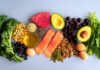
The central truth about whole food plant-based eating is that it reliably pushes weight in the direction of leanness, yet with deliberate structure it can absolutely support healthy weight gain and muscle maintenance—especially in midlife and beyond.
Key Points
- Whole food plant-based (WFPB) and Nutritarian-style diets are engineered for low calorie density and high satiety, so unintentional weight loss is common—especially in people coming from richer diets.
- Weight gain on these diets follows the same physiology as any other pattern: if you consistently eat more calories than you burn, you gain weight, but the high fiber and water content make that surplus harder to achieve for some people.[16]
- Healthful plant-based patterns are consistently associated with less long‑term weight gain; “unhealthful” plant-based patterns rich in refined grains and sweets are linked with more weight gain.[19][20]
- Dr. Joel Fuhrman’s Nutritarian approach treats weight gain as a targeted goal: more frequent structured meals, strategic use of energy‑dense whole foods, and resistance training to favor muscle rather than fat.[3][23]
- For adults over 40, the real task is not just adding pounds, but protecting muscle, bone, and metabolic health while staying within a whole‑food, low‑processed framework.
Why Weight Behaves Differently on a Whole Food Plant-Based Diet
To understand why many people lose weight easily on a whole food plant-based diet—and why others struggle to gain—start with calorie density. Most whole plant foods pack relatively few calories into a large volume because they are rich in water and fiber. An equal-weight portion of steamed vegetables or beans simply contains fewer calories than cheese, meat, or fried foods. On top of that, fiber itself contributes bulk without calories and slows digestion, which increases fullness and blunts overeating.[21]
Large cohort studies reflect this mechanism. When researchers score people on how closely they follow plant-based patterns, those with higher adherence to healthful plant-based diets gain less weight over four-year intervals than those eating more animal foods and refined products.[19][20] Lifestyle medicine reviews reach similar conclusions: individuals emphasizing whole plant foods have lower rates of overweight and obesity, and WFPB diets are highly effective for reducing weight and preventing weight gain in the population at large.[13][21]
Energy Balance Still Rules: Why Weight Gain Is Possible
Against that backdrop, it is easy to jump to the absolutist claim that “you can’t gain weight on a whole food plant-based diet.” Physiology says otherwise. The energy balance equation has not been repealed for vegans. If total calorie intake surpasses daily expenditure consistently, body weight will rise regardless of whether those calories come from plants or animals.[16]
That principle is acknowledged even by outlets that otherwise frame plant-based eating as a weight‑loss strategy. U.S. News, for example, notes that people can gain weight on plant-based diets when they eat more calories than they burn, often via liberal portions of calorie‑dense plant foods, large serving sizes, or frequent snacking.[16] Practical guides aimed at vegans seeking to bulk up say the same thing in more operational terms: aim for a daily surplus of roughly 300–500 calories above maintenance, prioritize protein from legumes, soy, seitan, nuts, and seeds, and combine this with progressive resistance training.[23]
Fuhrman’s Nutritarian Lens: Designed for Leanness, Adaptable for Gain
Joel Fuhrman’s Nutritarian style sits at the strict healthful end of the plant‑based spectrum. It is built around what he calls G‑BOMBS—greens, beans, onions, mushrooms, berries, and seeds—with vegetables often comprising 30–60% of daily calories, complemented by beans, fruit, nuts/seeds, and limited whole grains.[6][9] Processed foods, added oils, refined grains, and most animal products are minimized or eliminated.[6][8][9]
Unsurprisingly, this pattern tends to drive weight loss. Fuhrman’s own clinical publications and program reports feature large average reductions in body weight, waist‑to‑height ratio, and cardiometabolic risk parameters in populations with obesity or high chronic disease risk.[2][5][10] His public messaging emphasizes using this diet to reach “optimal weight,” reverse diabetes, and lower cardiovascular risk, which has cemented a weight‑loss identity around the Nutritarian brand.[2][8][10]
How to Engineer Healthy Weight Gain on a WFPB or Nutritarian Diet
Two levers dominate: calorie density and eating pattern. Fuhrman’s strategy for someone needing to gain weight within a Nutritarian framework centers on four structured meals per day instead of three, with each meal built to maximize protein bioavailability and overall energy intake while remaining composed of whole foods.[2][3][1]
Practically, that means:
First, building meals that deliberately mix beans, grains, nuts, seeds, and vegetables. The combination of legumes and high‑protein grains such as quinoa, amaranth, teff, or oats raises both calorie and protein density per bite.[1][3] Adding roughly an ounce of nuts and seeds to each meal delivers concentrated calories and healthy fats without resorting to oils; Fuhrman emphasizes using them inside meals—blended into dressings, sauces, or desserts—rather than grazing on them mindlessly between meals.[1]
Second, increasing meal frequency within a daytime eating window. Fuhrman recommends four evenly spaced meals, still finishing by early evening so that digestion does not extend into the night, which he considers unfavorable for longevity.[3] For older adults with smaller appetites, this pattern spreads the caloric burden out, making it easier to reach a daily surplus without uncomfortable fullness at any one sitting.
Third, pairing this dietary pattern with resistance training. In the weight‑gain conversation, Fuhrman is explicit: you gain muscle in the gym, not from food alone.[3] The diet provides the amino acids, micronutrients, and energy needed for muscle repair and growth, but progressive overload—structured increases in training volume or intensity—is what signals the body to apportion those calories to lean mass rather than fat. This mirrors independent guidance from sports‑nutrition oriented plant‑based resources, which advise protein intakes around 1.2–1.6 g/kg and 3–5 weekly strength sessions for adults trying to build muscle on a vegan diet.[23]
Where the Evidence Is Strong—and Where It Is Thin
On the core question—whether weight can go up on a whole food plant-based diet—the evidence is decisive. Population studies, clinical interventions, and basic physics all converge on the conclusion that weight change on WFPB diets still obeys energy balance. What is unique about these diets is not the law, but the friction: high fiber, low calorie density, and strong satiety cues make unintended surpluses less common and intentional surpluses more work.[13][21]
There are, however, gaps. There are few controlled trials explicitly recruiting underweight or normal‑weight adults and directing them to gain weight on a strict Nutritarian or added‑oil‑free WFPB plan while tracking body composition. Fuhrman’s advice on four meals per day, mixed plant‑protein sources, and early cut‑off times is grounded in general nutrition logic and his clinical experience, but not in published, protocol‑specific weight‑gain trials.[2][3][8] Likewise, while we know that “unhealthful” plant‑based patterns can drive weight gain, we do not yet have fine‑grained comparisons of how easy or difficult it is to maintain a surplus on various whole‑food plant-based templates differing in fat content, starch emphasis, or meal timing.
Practical Guidance for Older Adults Seeking Healthy Weight Gain
For someone in midlife or later years, the goal is not to recreate the body of youth at any cost, but to maintain strength, function, and resilience. On a whole food plant-based or Nutritarian diet, that starts with clarity about your current trajectory. If your weight has been drifting downward unintentionally, review your daily pattern: are meals skipped? Is dinner small because you have adopted an early cut‑off but not expanded earlier meals? Are nuts, seeds, and whole grains used sparingly out of habit from a prior weight‑loss phase?
From there, making a deliberate plan is more effective than simply “eating more.” A reasonable framework for many adults is to add one extra structured meal or substantial snack built around beans, whole grains, and nuts/seeds, and to monitor weight weekly. If the scale is static after two or three weeks, increase portions or add another 200–300 daily calories in the form of energy‑dense whole foods, paralleling the incremental approach used in plant-based weight‑gain guides.[23] At the same time, commit to a consistent resistance‑training routine with compound movements—squats, deadlifts, presses, rows—two to four times per week, matched to your joint health and training age.
Sources:
[1] YouTube – Can You Gain Weight on a Whole Food Plant-Based Diet? Healthy Aging …
[2] Web – CMV: The “Nutritarian diet” is the scientifically best diet for … – …
[3] Web – Improved Cardiovascular Parameter With a Nutrient-Dense, Plant …
[5] Web – How Do Unhealthy Foods Trigger Addiction and Weight Gain?
[6] Web – Protocol and Preliminary Results of the Nutritarian Women’s Health …
[8] Web – Whole food, plant-based nutrition changes lives! #DrJoelFuhrman
[9] Web – Beginner’s Guide to the Nutritarian Diet | DrFuhrman.com
[10] Web – Nutritarian Diet: Beginner’s Guide to Benefits, Foods & Dr …
[13] Web – Effects of Plant-Based Diets on Weight Status: A Systematic Review
[15] Web – The benefits of plant-based nutrition: Obesity & weight management
[16] Web – the evidence for whole-food plant-based diets | BJPsych International
[19] Web – Changes in intake of plant-based diets and weight change
[20] Web – Started Gaining Weight on a PBD – Here is why : r/PlantBasedDiet
[21] Web – Changes in intake of plant-based diets and weight change – PubMed
[23] Web – Plant-based diets for maintaining a healthy weight