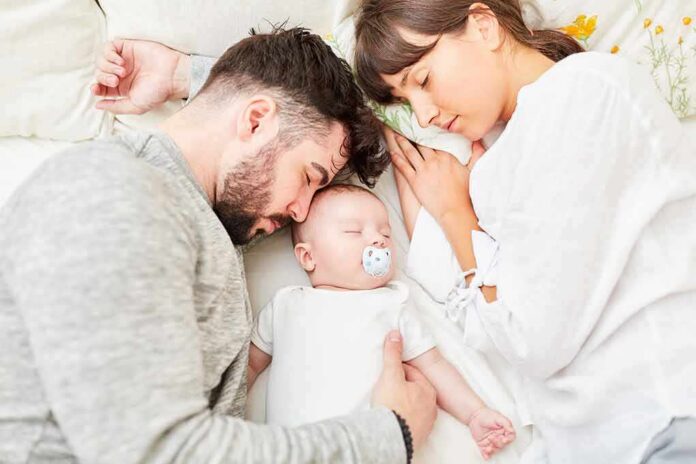
Dads who take at least two weeks off after a baby arrives build closer bonds with that child for years to come, according to new research out of Singapore.
Quick Take
- A 2025 Singapore study found two or more weeks of paternity leave led to stronger father-child closeness and better family dynamics.
- Researchers linked that leave to higher academic achievement and fewer behavior problems in kids ages 3 to 8.
- Global data from the Organisation for Economic Co-operation and Development (OECD) backs up the pattern across four countries.
- Not every study agrees. A Spain study found longer leave sometimes meant more developmental delays, not fewer.
What The Singapore Research Actually Found
Researchers tracked families over time and published their results in the Journal of Marriage and Family. Fathers who took two weeks or more of paternity leave showed greater involvement in childcare. Their relationships with their kids grew closer. Family dynamics overall improved, too. These are not vague impressions. They come from a longitudinal study designed to follow the same families as children grew.
The same research team found something else worth noting. Paternity leave was tied to better academic achievement later on, through both direct and indirect paths. It was also linked to fewer behavior problems in children between ages 3 and 8, mostly because family dynamics improved. That’s a meaningful signal. A dad who shows up early seems to shape how a household runs for years.
The Global Picture Points The Same Direction
This isn’t just a Singapore story. The OECD studied fathers in Australia, Denmark, the United Kingdom, and the United States. Dads who took two or more weeks of leave were more likely to stay involved in childcare as their kids grew older. In the United Kingdom specifically, researchers found the clearest link between highly involved fathers and better results on cognitive tests.
Ohio State University researcher Sarah Schoppe-Sullivan reviewed decades of fatherhood research and found a consistent pattern. Kids with steady, positive father involvement tend to have better peer relationships, higher scores on intelligence tests, stronger math and language skills, and more secure attachment to their parents. None of this happens by accident. It happens because a present father changes the daily rhythm of a household.
A More Complicated Finding From Spain
Not every data point tells the same story, and that’s worth saying plainly. A study of roughly 5,000 children in Spain found that eligibility for four extra weeks of paternity leave was tied to a 12-percentage-point jump in developmental delays. One theory is that longer leave meant less time in formal childcare, which researchers believe was often higher quality than what happened at home. The takeaway isn’t that leave backfires. It’s that how leave gets used matters as much as how much of it exists.
Why This Debate Keeps Showing Up In Policy Circles
The OECD has pushed paid paternity leave partly on economic grounds, arguing it helps mothers stay in the workforce and spreads unpaid caregiving more evenly at home. Japan already offers fathers around a year of leave, though workplace stigma there still keeps many men from using it. These policy debates run parallel to the child-development research, and they often get tangled together in public conversation even though they’re answering different questions.
What’s clear from the research is this: a father who takes real time off in those early weeks tends to stay more engaged for years afterward, and that engagement shows up in measurable ways for the child. What’s less settled is how much of that benefit comes from the leave itself versus the kind of household and job stability that makes taking leave possible in the first place. Families without paid leave options, or without job security, remain underrepresented in nearly all of this data.
Paternity leave and a father’s engagement during infancy is associated with better cognitive, social, and emotional regulation outcomes for the child, writes Alvin Thomas.https://t.co/tLmfmDjGl8
— TIME (@TIME) October 10, 2026
For parents weighing the decision today, the evidence leans in one clear direction. Two weeks or more of dedicated time at home, spent actually engaged in caregiving, correlates with closer families and better-adjusted kids down the road. That’s not a guarantee. But it’s a pattern strong enough, and consistent enough across countries, to take seriously.
Sources:
time.com, cwlibrary.childwelfare.gov, oecd.org, onlinelibrary.wiley.com