A single blood draw just flagged signs of cancer in over 200 people who had no symptoms at all, and more than half of those confirmed cancers were caught in the early stages when treatment works best.
Quick Take
- The PATHFINDER 2 study tested 35,878 adults age 50 and older across the United States and Canada who had no cancer symptoms.
- Grail’s Galleri blood test flagged 216 possible cancer signals, and doctors confirmed 133 actual cancers, spanning 17 different cancer types.
- Roughly half of the cancers the test caught were stage one or two, the stages where treatment has the best odds.
- A separate, larger United Kingdom trial of 142,000 people missed its main goal, showing the technology still has limits.
A Blood Test Built to Scan the Whole Body at Once
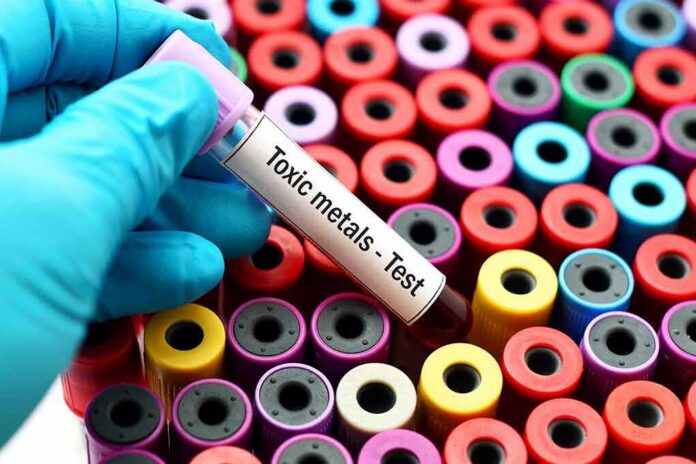
Traditional cancer screening checks one organ at a time, like a mammogram for breast cancer or a colonoscopy for colon cancer. The Galleri test, made by the company Grail, works differently. It looks for tiny fragments of DNA that cancer cells shed into the bloodstream, scanning for signals from many cancer types in a single draw.
Researchers enrolled 35,878 adults age 50 and older in the United States and Canada for the PATHFINDER 2 study. None of the participants had any signs of cancer or a cancer diagnosis in the past three years. That size makes it one of the largest studies ever run on this kind of multi-cancer blood test.
What the Numbers Actually Show
The test flagged a possible cancer signal in 216 participants. Doctors later confirmed cancer in 133 of those cases, a positive predictive value of 61.6 percent, meaning most flagged signals turned out to be real. The test picked up signals across 17 different cancer types, including ovarian, lung, breast, and colorectal cancers.
Among people tracked for more than a year, the test caught 40.4 percent of cancer cases that turned up during that window, a measure called sensitivity. That number matters because it shows the test still misses a meaningful share of cancers, even as it catches others that routine screening would likely overlook entirely.
Why Catching Cancer Early Changes the Odds
Stage matters more than almost anything else in cancer outcomes. A tumor caught at stage one is far more treatable than one caught at stage four, after it has spread. Researchers reported that about half of the cancers the Galleri test detected in PATHFINDER 2 were stage one or two. Cancers like ovarian and pancreatic rarely get caught that early through normal screening.
Grail says the next step is seeking approval from federal regulators to market the test more broadly. An advisory panel already weighed in, voting 7 to 2 in favor of the test overall, though the vote split more narrowly, 6 to 4, on whether the evidence proves it actually works as intended.
A Bigger Trial Shows the Technology Still Has Limits
A separate and much larger study, the NHS-Galleri trial in England, enrolled 142,000 adults to test whether adding Galleri to standard screening would cut the number of late-stage cancer diagnoses. That trial’s main goal was not met. One independent reviewer noted that, based on current trial results, there still isn’t enough evidence to justify rolling the test out to the general population.
That outcome doesn’t erase what PATHFINDER 2 found. It does show why scientists keep running bigger trials before recommending any new screening tool for widespread use. A test can find real cancers and still need more proof that using it broadly actually saves lives and avoids unnecessary stress from false alarms.
What This Means for Patients Down the Road
For now, Galleri remains a tool used alongside standard screening, not a replacement for mammograms, colonoscopies, or other established tests. Families dealing with a history of hard-to-detect cancers may find real value in a blood test that watches for multiple threats at once. Regulators and insurers will decide how fast this technology reaches doctors’ offices nationwide.
🧬 What if cancer could leave a molecular fingerprint in your blood—before you ever knew it was there?
That future may be closer than we think.
GRAIL’s Galleri multi-cancer early detection (MCED) blood test recently received a favorable vote from an FDA advisory committee.… pic.twitter.com/Z6dHoRJxsm
— Dr. Nicole M. Batty MD, MBA, MSF, FACP, FASCP, (@Echelonmednyc) September 28, 2026
The real test now is whether insurers and the Food and Drug Administration move with the same urgency that the science has already shown.
Sources:
mindbodygreen.com, daijiworld.com, advisory.com, fda.gov, grail.com, sciencemediacentre.org, discovery.ucl.ac.uk, pmc.ncbi.nlm.nih.gov