Every jack-o’-lantern left on the curb this week is quietly adding methane to the atmosphere, and cities across the country want you to stop throwing them away.
Quick Take
- Pumpkins tossed in landfills break down without oxygen, creating methane, a greenhouse gas far more potent than carbon dioxide.
- Michigan’s environmental agency says Americans dump over 1 billion pounds of pumpkins into landfills every year.
- Local governments, from Clark County, Washington, to Peel Region near Toronto, now offer curbside, drop-off, and backyard composting options.
- Residents must strip off candles, wax, paint, and stickers before composting, or the whole load can get rejected.
What Happens When A Pumpkin Hits The Landfill
The science behind this is not complicated. The U.S. Environmental Protection Agency explains that when food and other organic material breaks down in a landfill without oxygen, bacteria produce methane. That gas traps heat in the atmosphere far more aggressively than carbon dioxide does. A pumpkin is mostly water and soft flesh, which makes it an easy target for that same anaerobic breakdown once it’s buried under layers of trash.
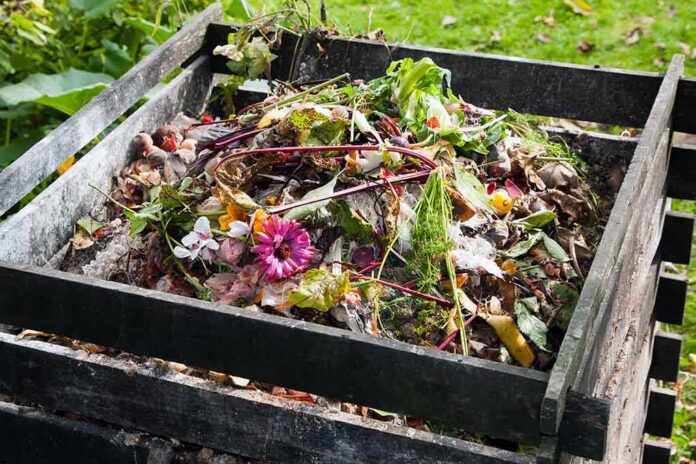
Michigan’s Department of Environment, Great Lakes, and Energy puts a number on the problem. The agency says Americans throw away more than 1 billion pounds of pumpkins in landfills every year, and that decomposition there generates methane. Michigan’s fix is simple: break the pumpkin into pieces and toss it into a compost bin or pile along with kitchen scraps, yard waste, leaves, or straw. No special equipment is required for most households.
Clark County, Washington, put real numbers behind the warning in an October announcement. County officials say pumpkins rotting in landfills produce methane that is at least 28 times more potent than carbon dioxide. Composting instead, they note, cuts landfill volume and helps keep local soil fertile. The county backs that message with 18 free, year-round composting hub locations plus curbside and backyard options residents can use immediately.
Cities Are Building Real Drop-Off Systems, Not Just Giving Advice
Peel Region, which covers suburbs west of Toronto, updated its waste-sorting guidance to make pumpkin disposal almost foolproof. Residents are told to pull out any candles or wax, then drop the pumpkin into the green organics cart, set it out with yard-waste collection, or toss it into a backyard composter. The instructions are blunt and specific, which matters because confusion is usually what keeps people from composting at all.
TIME magazine’s coverage of the issue points readers toward curbside and apartment composting programs, neighborhood drop-off sites, and seasonal pumpkin-collection events. The piece quotes an expert who recommends composting pumpkins in fall specifically because leaves and grass clippings are already piling up, giving households the extra material a compost pile needs to work properly. That timing argument is practical. Pumpkins alone are mostly water and don’t compost well without drier material mixed in.
Waste districts from Arkansas to South Carolina have rolled out similar pumpkin drop-off programs this season, signaling this isn’t a coastal or big-city trend. It’s spreading into smaller counties that don’t normally run specialized composting operations. That expansion suggests local governments see real value in diverting this specific waste stream, even if building new infrastructure takes time and money.
The Fine Print Homeowners Need To Know
None of this works if the pumpkin still has its decorations on. Every program reviewed requires removing candles, wax, paint, glitter, and stickers before composting. Contaminated pumpkins can get an entire batch of compost rejected at a processing facility, which wastes the effort and undercuts the environmental goal. It’s a small step, but skipping it defeats the purpose entirely.
There’s also a simple reality worth stating plainly: not every neighborhood has curbside organics pickup or a nearby drop-off hub yet. Backyard composting remains the fallback for anyone outside a formal program’s service area, and it works fine for a single pumpkin with some dry leaves mixed in. The bigger point stands regardless of zip code. A pumpkin in a backyard pile breaks down with oxygen present, avoiding the methane problem a sealed landfill creates. That’s a straightforward trade most households can make with almost no extra effort.
After Halloween festivities are all said and done, Charleston County Environmental Management is allowing free pumpkin composting, the county announced on Friday.
>> LINK IN BIO pic.twitter.com/M4iXUKcULo
— WCBD News 2 | Count on 2 (@WCBD) October 31, 2026
The lesson from this Halloween season isn’t complicated. Local governments have done the legwork of building composting options, and the environmental case for using them is backed by federal science on how landfills generate methane. Skipping the trash can for a compost bin costs a homeowner nothing but a few extra minutes.
Sources:
time.com, peelregion.ca, michigan.gov, nwaonline.com