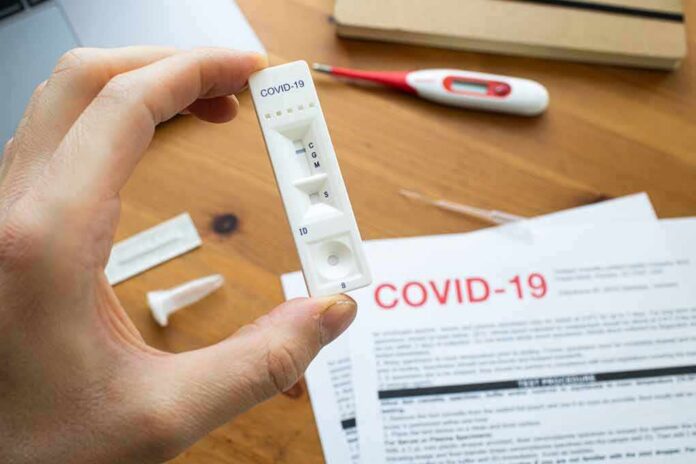
More testing is flooding our lives, but it does not always make us healthier.
Story Snapshot
- The Food and Drug Administration says direct-to-consumer tests carry real risks.
- False positives can trigger anxiety, scans, and even needless procedures.
- Regulators have warned companies about shaky claims and weak validation.
- Common-sense steps can cut harm: confirm results and involve your doctor.
What regulators keep warning about
The Food and Drug Administration states that direct-to-consumer tests aim to empower people, yet they also carry risks that can affect health choices. The American Heart Association explains that these tests rarely give a clear yes or no on disease risk and can lead to extra testing or treatment after false positives. These cautions are not new. Over years, agencies and medical groups have repeated the same theme: access is good, but accuracy and context matter.
House hearings and agency actions underline the point. A senior Food and Drug Administration official told Congress that consumer genetic tests had problems like faulty analysis, bold claims, and poor traceability, which can mislead buyers and doctors. That testimony mirrors a larger record of warnings and letters to companies. The core issue is simple. When a test overpromises or misfires, people may chase a problem they do not have, or ignore one they do.
How false positives waste time, money, and peace of mind
False positives start a chain reaction. A report flags a risk. You worry, then book visits, scans, and more labs. Each step adds cost and stress. Some people get drugs or procedures they did not need. Professional groups warn that many consumer tests do not check all key gene variants and can miss true risk while also raising false alarms. That mix leads to two bad paths at once: needless care for some, false reassurance for others.
Lab methods also matter. Single nucleotide polymorphism chip technology can read common variants well, but it struggles with very rare ones, which boosts false positives in raw data files. People sometimes download that raw data and run it through third-party tools. Those tools can magnify errors and produce scary but wrong results. This is not a small, nerdy problem. It is the core reason why confirmatory testing in a clinical lab is not a luxury; it is step one to protect you from a wild goose chase.
Where rules lag and why that invites trouble
Policy has moved unevenly. Reviews describe gaps in how these products are marketed, validated, and explained to buyers. Some direct-to-consumer offerings exploit loopholes that leave consumers with fewer safeguards than they would have inside normal health care. The American College of Obstetricians and Gynecologists lists the basic risks plainly: false positives, false negatives, and misread results that can misdirect care. The pattern is familiar. Markets sprint. Rules jog. Consumers pay the price in confusion and extra bills.
From a conservative, common-sense view, this comes down to truth in claims and accountability. Companies should not sell certainty when they only have a hint. Regulators should enforce clear standards on accuracy and marketing, then get out of the way. Buyers should have easy access to the test’s limits, in plain language, before they buy. A fair market needs good information more than it needs more products.
Smart ways to use tests without getting used by them
A direct-to-consumer test can spark useful action when handled with care. Treat results as a conversation starter, not a diagnosis. Confirm any risk or variant with a clinical-grade test ordered through your clinician. Ask what the result changes today. If the answer is “nothing concrete,” focus on habits that cut risk across the board: diet, exercise, sleep, and screening on the schedule your doctor recommends. Do not let a shaky number steal your sleep or your savings.
Two bright lines help you steer. First, clinical validity matters more than novelty. A result should connect to disease risk with strong evidence, not hype. Second, actionability beats curiosity. If a finding will not change your care plan, bank it and move on. That mindset respects both personal freedom and personal responsibility. It keeps your health decisions anchored to proven steps, not to the noise of an app notification.
Sources:
time.com, fda.gov, ahajournals.org, pmc.ncbi.nlm.nih.gov, pubmed.ncbi.nlm.nih.gov