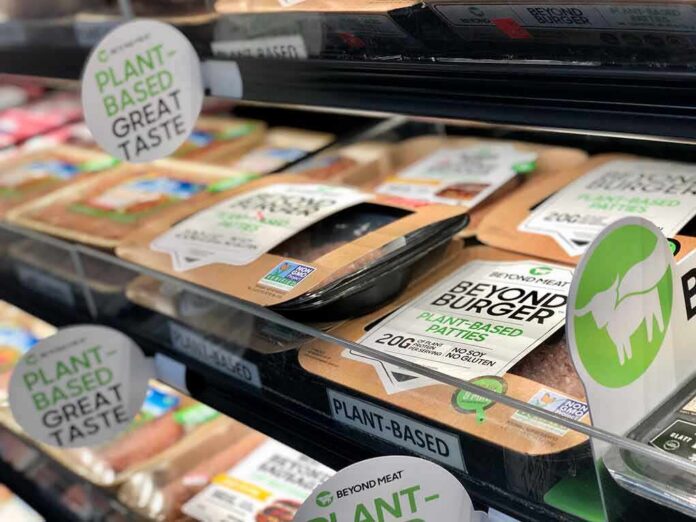
A food package can carry a big green “healthy” banner on the front and still hide more sodium than a fast food meal on the back. The only way to know for sure is to flip the box over and read the numbers the government requires every manufacturer to print.
Quick Take
- Nutrition Facts labels start with serving size and servings per container, numbers set by the Food and Drug Administration (FDA), not a suggestion for how much to eat.
- The Percent Daily Value column tells shoppers whether one serving is low or high in a nutrient, using 5 percent or less as low and 20 percent or more as high.
- Words like “low,” “reduced,” and “sugar-free” on the front of a box have exact legal meanings set by federal regulation, not marketing opinion.
- The ingredient list, ordered from most to least by weight, often reveals more about a product than the Nutrition Facts panel alone.
Start With Serving Size, Not the Calorie Count
Every Nutrition Facts label opens with two numbers: serving size and servings per container. These appear before calories or fat because every other number on the label depends on them. The FDA states clearly that serving size reflects a standardized reference amount, not a recommendation of how much a person should actually eat. Skip this step, and every later calculation gets thrown off.
A bag of chips might look like 150 calories, but if the bag holds two and a half servings, someone eating the whole thing just consumed 375 calories without realizing it. Today’s guide to reading labels places this step first for exactly this reason, walking viewers through serving size before touching fat, sodium, or sugar content.
What That Percentage Column Is Really Measuring
Next to each nutrient sits a percentage, the Percent Daily Value. The FDA defines this as the share of a full day’s recommended intake that one serving provides, based on a standard 2,000-calorie diet. A simple rule applies across the board: 5 percent or less counts as low, and 20 percent or more counts as high. That single rule lets a shopper judge sodium, fiber, or saturated fat in seconds.
This matters most for nutrients people are actively trying to limit, like sodium and saturated fat, and nutrients people often fall short on, like fiber and potassium. A cereal box showing 2 percent Daily Value for fiber but 35 percent for sodium tells a clear story, no marketing language required.
Front-Label Buzzwords Have Legal Definitions
Terms like “low calorie,” “reduced,” and “sugar-free” are not vague marketing phrases. Federal rules define them precisely. Low calorie means 40 calories or less per standard serving. Low fat means 3 grams or less. Low sodium means 140 milligrams or less. Reduced means at least 25 percent less of a nutrient than the comparison product, and sugar-free means under half a gram of sugar per serving. These thresholds come from detailed federal regulations covering nutrient content claims across every food category.
Added sugar deserves particular attention, since federal labeling rules now require it to be broken out separately from naturally occurring sugar on every package. A yogurt with 12 grams of total sugar might contain zero added sugar if that sugar comes entirely from milk and fruit, a distinction invisible to anyone who only glances at the front label.
Why the Ingredient List Still Matters
Registered dietitian Cynthia Sass told Today that the ingredient list is the first thing she checks on any package, because it shows what a product is actually made of, not just its nutrient totals. Ingredients are listed by weight, heaviest first, so when sugar, corn syrup, or refined oil appears near the top, that tells shoppers something no percentage column can.
Research on labeling systems backs up the idea that numbers alone only go so far. Studies on front-of-package labeling consistently find that simplified visual cues, like color coding or symbols, help shoppers interpret nutrition information faster and more accurately than digging through percentages. That does not make the Nutrition Facts panel useless. It means the people who read both the front and the back, and who understand what the numbers mean, end up with the clearest picture of what they are actually buying and eating.
Sources:
youtube.com, fda.gov, accessdata.fda.gov, today.com, ecfr.gov, cambridge.org