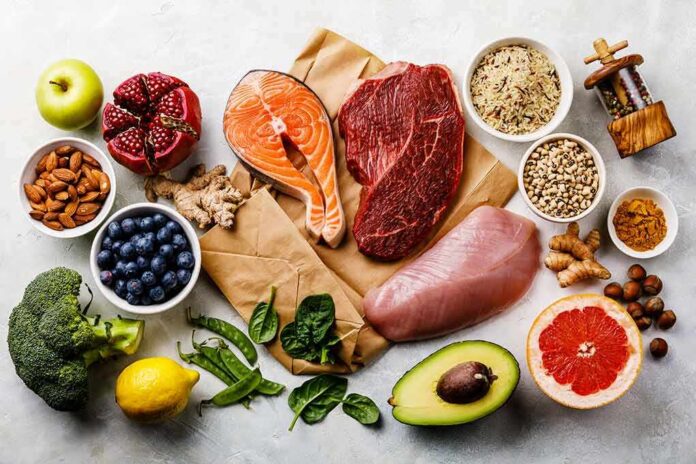
Scientists finally proved in a controlled experiment what dinner tables have suspected for years: ultra-processed food makes people eat more and gain weight, even when the diet looks healthy on paper.
Quick Take
- A National Institutes of Health (NIH) trial found adults ate 508 more calories a day on an ultra-processed diet and gained weight in just two weeks.
- A 2024 BMJ study tracking Americans for decades found higher ultra-processed food intake tied to a 4% higher risk of death.
- Processed meats and sugary drinks carried the strongest health risks in that same large study.
- A 2025 trial found people lost more weight on minimally processed meals than on ultra-processed meals, even when both followed official healthy-eating guidelines.
The Experiment That Changed the Conversation
In 2019, NIH researchers locked 20 weight-stable adults into a metabolic ward and fed them two diets, two weeks each. One diet was ultra-processed. The other was whole, minimally processed food. Both diets matched calories, sugar, fat, sodium, and fiber exactly. Yet on the ultra-processed diet, people ate 508 more calories a day and gained nearly a kilogram.
Lead researcher Kevin D. Hall called it a breakthrough. “This is the first study to demonstrate causality — that ultra-processed foods cause people to eat too many calories and gain weight,” he said in NIH’s own reporting. Because the diets were matched nutrient-for-nutrient, the extra eating couldn’t be blamed on sugar or fat content alone. Something about the processing itself drove people to overeat.
A Thirty-Year Look At Real Lives Backs The Warning
A 2024 study published in BMJ tracked a massive American sample for decades and found people eating the most ultra-processed food had a 4% higher risk of dying from any cause compared to those eating the least. The size of that risk is modest, but the pattern holds across one of the largest and longest-running health datasets researchers have.
The details matter more than the headline number. Processed meat products carried a 13% higher overall death risk and a 43% higher risk of dying from respiratory illness. Sugar-sweetened and artificially sweetened drinks were linked to a 9% higher death risk. These aren’t abstract categories. They’re the hot dogs, lunch meats, and sodas sitting in most American refrigerators right now.
Diabetes And Heart Disease Show The Same Pattern
French researchers following more than 104,000 adults for six years found every 10% increase in ultra-processed food intake raised relative type 2 diabetes risk by 15%, pushing case rates from 113 to 166 per 100,000 people a year. A related French cohort of about 105,000 adults found a 10% increase in ultra-processed intake tied to a 12% higher cardiovascular disease risk over five years.
These are observational studies, not locked-ward experiments, so they can’t prove cause and effect on their own. But they line up with the lab findings instead of contradicting them. When a controlled trial and large population studies point the same direction, that consistency itself is meaningful evidence.
Newer Trial Confirms The Pattern Even Under “Healthy” Guidelines
Critics have long argued that ultra-processed foods get unfairly lumped together, since the category includes everything from packaged whole-grain bread to candy. A 2025 Nature Medicine crossover trial addressed that concern directly. Researchers built both an ultra-processed diet and a minimally processed diet, each following official United Kingdom healthy-eating guidance. Participants still lost more weight on the minimally processed version.
That result matters because it rules out the easy excuse that ultra-processed foods are only unhealthy when they’re also nutritionally poor. Even a “healthy” ultra-processed diet underperformed a whole-food diet built to the same nutrition rules. Researchers at Nature Reviews Gastroenterology and Hepatology have also pointed to food additives and gut health as a plausible mechanism, though that science is still developing.
What This Means For Dinner Tonight
None of this means every packaged food is poison or every home-cooked meal is perfect. But the direction of the evidence is consistent across a controlled trial, decades of population data, and international research teams. Ultra-processed food pushes people to eat more, gain weight, and face higher long-term health risks. That’s not a theory anymore. It’s a measured outcome, repeated across different methods and different countries.
Higher consumption of ultra-processed foods was found to increase risk of seven types of health conditions in the new study. https://t.co/b0Oe66hlHL pic.twitter.com/M29mhEMjIi
— Newsweek (@Newsweek) October 1, 2026
For families trying to cut through diet fads and conflicting headlines, the takeaway is simple and grounded in real data: food that comes apart easily into recognizable ingredients tends to behave differently in the body than food engineered for shelf life and craveability. The science finally caught up to common sense.
Sources:
cc.nih.gov, pmc.ncbi.nlm.nih.gov, bmjgroup.com, bmj.com