Utah’s biggest wildfire of the season is racing through dry forest, and the hardest truth is that officials already see a human hand behind it.
Quick Take
- The Cottonwood Fire has grown into the largest active wildfire in the United States.
- Utah fire officials say the blaze is human-caused, but the exact ignition source is still under investigation.[1][5]
- Governor Spencer Cox declared an emergency and ordered a statewide fireworks restriction through July 5.[3][5]
- Fire crews are fighting 0% containment, while communities face closures, evacuations, and power shutoffs.[1][3][6]
The Fire That Changed the Map in Days
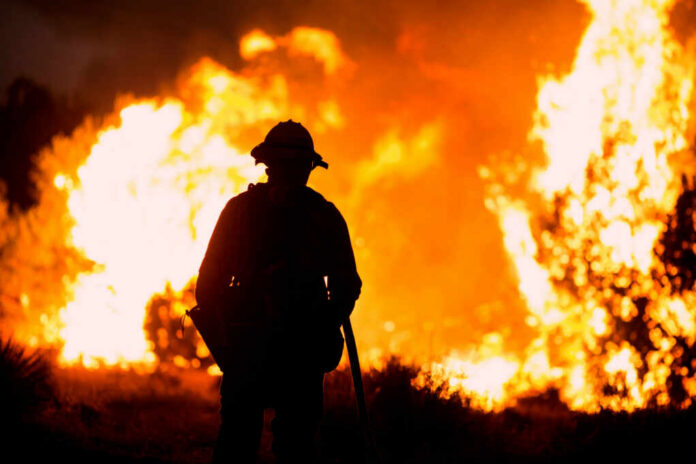
The Cottonwood Fire has turned from a fast-moving blaze into a statewide test of nerve. KUTV reported that the fire quickly grew to about 59,600 acres with no containment, while the Associated Press later described it as the largest wildfire in the United States moving through canyons and over mountainsides.[1][5] That scale matters because big fires do not just burn land. They rewrite daily life for everyone nearby.
What makes this fire so unsettling is not only its size. It is the speed. The fire spread through rugged terrain, dry brush, and parched forest, which gave crews few easy places to stop it.[5][6] The result was a widening perimeter, damaged cabins and resort property, and a growing sense that every hour without rain made the situation worse.[5][7]
Why the Cause Became the Story
Utah fire officials say the blaze is human-caused, but the exact ignition source remains under investigation.[1][2] That distinction matters. Human-caused does not yet mean the same thing as a named person, a known act, or a finished forensic report. It does mean the fire did not start from lightning, and it places prevention squarely in the public conversation.[3][5]
The early reporting also left room for confusion. Some articles said the cause had not yet been determined even as officials pointed to human activity as the likely category for this year’s fires.[3][5] That gap helps explain the tug of war in public trust. People want clear answers fast. Fire investigators often need days or weeks before they can say exactly how a blaze began.
Emergency Powers, Closures, and the Cost of Readiness
Governor Spencer Cox declared a state of emergency as the fire spread and warned that it could become the most destructive and costly fire in Utah history.[5][10] State leaders also restricted fireworks through July 5 and gave the state forester broader authority to act during the danger period.[3][4] Those moves are blunt tools, but wildfire rarely leaves room for gentle ones.
Utah has declared a state of emergency as multiple major wildfires continue to burn across the state, including the largest wildfire in the United States.
At least 10 major wildfires are burning statewide, prompting evacuations, campground closures and restrictions on… pic.twitter.com/eRqiNNztw3
— Mosheh Oinounou (@Mosheh) June 28, 2026
The response has reached beyond the fire line. Officials ordered READY status for some communities, closed parts of Fishlake National Forest and State Highway 153, and used public safety power shutoffs to reduce ignition risk from electrical equipment.[3][7] Over 650 firefighters were tied up on related fires in the region, showing how quickly one blaze can strain an entire state’s resources.[3][7]
The Missing Numbers Still Matter
Even now, some of the most basic damage figures are still not locked down. Reporters said the number of destroyed buildings and properties was not yet available, and crews had not completed full assessments at Eagle Point Resort because the fire burned too intensely.[3][5][9] That uncertainty can frustrate the public, but it also reflects the reality of active wildfire work. Safe access often comes before exact accounting.
That is the part many people miss when they ask whether the response was enough. A fire at 0% containment four days after ignition sounds like failure to anyone outside the fire world.[4][6][8] Yet in steep terrain, with strong winds, low humidity, and scattered access points, early containment can be brutally hard. The more useful question is whether officials moved fast enough on warnings, closures, and crew deployment.
What This Fire Says About the West
The Cottonwood Fire fits a larger Western pattern. Human-caused wildfires are common in Utah, and state officials have long said most wildfires there start because of people, not lightning.[3][16] That makes prevention a public habit, not just a firefighting job. When a fire like this explodes, it exposes the weak spots all at once: dry weather, crowded edges of the wildland, and one bad spark with too much room to run.
For readers watching from a distance, the lesson is plain. Big wildfires rarely begin with a single dramatic scene. They begin with a small failure and end with a long list of forced choices. Utah is living through those choices now, and the real measure of the response will come later, when investigators can finally say how the fire started and how much it took from the state.
Sources:
[1] YouTube – Largest wildfire in the US spreads through tinder-dry forest in Utah
[2] Web – Utahns on notice as fast-moving as the Cottonwood Fire, the largest in …
[3] Web – Cottonwood Fire, the largest in the US, spreads overnight, forcing …
[4] Web – Uncontained Cottonwood Fire burns 92,000 acres in Southern Utah
[5] YouTube – Utah’s Cottonwood Fire could be the worst in state’s history
[6] Web – Residents on notice as fast-moving fire in Utah, the largest in the …
[7] YouTube – Cottonwood Fire, nation’s largest wildfire, burns 92,000 acres in …
[8] Web – Nation’s largest wildfire grows to over 70,000 acres in Southern Utah
[9] Web – Photos capture nation’s largest Cottonwood Fire, its extensive damage …
[10] YouTube – The “Cottonwood Fire” is Becoming One of the Most Destructive Fires …
[16] Web – [PDF] Large projected increases in area burned and wildfire frequency …