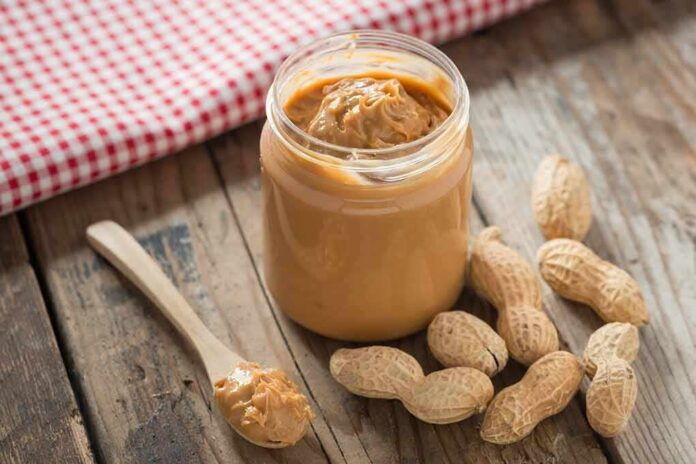
A simple jar of peanut butter may be doing more for your heart than you think, according to a new six-month trial tracking how peanuts change the fat floating in your blood.
Quick Take
- A six-month trial called ARISTOTLE studied 63 adults who added peanuts to their daily diets.
- Participants ate skin-roasted peanuts, peanut butter, or a refined peanut-oil spread.
- Researchers found a specific peanut fat signature in the blood tied to lower diabetes risk.
- The findings line up with years of smaller studies showing peanuts can lower triglycerides and cholesterol.
What The New Peanut Trial Actually Measured
The ARISTOTLE trial, published in Frontiers in Nutrition, followed 63 adults for six months. Each person added one peanut product to their normal diet: skin-roasted peanuts, peanut butter, or a refined peanut-oil spread. Researchers tracked how these choices changed blood fats over time, rather than relying on a single blood draw after one meal.
People eating whole peanuts or peanut butter saw better management of their triglycerides, the fat particles in blood tied to heart disease risk. That result matters because triglycerides respond quickly to diet changes and are a key marker doctors watch when assessing heart health over time.
A New Fingerprint Called The Peanut Lipidomic Signature
Scientists at the German Institute of Human Nutrition Potsdam-Rehbruecke, working with researchers at the University of Barcelona, identified something they call a Peanut Lipidomic Signature. This is a specific pattern of fat molecules that shows up in the blood after regular peanut eating. The team linked that pattern to a lower risk of developing type 2 diabetes.
That signature gives researchers a measurable fingerprint, not just a general claim that peanuts are “heart healthy.” It lets scientists trace a direct path from a food on your plate to a biological change inside your bloodstream, which is a more rigorous standard than relying on dietary surveys alone.
How This Fits With Years Of Earlier Peanut Research
This is not the first study to connect peanuts with better blood fat numbers. A review of nine randomized trials covering 643 people found that eating 25 to 200 grams of peanuts or peanut butter daily for two to twenty-four weeks significantly lowered triglycerides. A study of healthy adults in Ghana similarly found that regular peanut eating lowered both total cholesterol and triglyceride levels.
Not every study agrees on every measurement. A broader systematic review of peanut research described the overall evidence as “conflicting and inconsistent,” even while still supporting peanuts’ role in heart health. A separate randomized trial and meta-analysis called the evidence “moderate,” pointing to differences in study length, participant groups, and how peanuts were prepared across trials.
Why The Mixed Results Make Sense, Not Less Trustworthy
Nutrition science rarely delivers identical results across every trial, and that is normal, not suspicious. Short trials measure blood markers over weeks. Larger reviews combine years of different diets, doses, and populations. When most of that combined evidence points the same direction, as it does here toward improved triglycerides and favorable lipid patterns, it builds a credible, repeatable case rather than a contested one.
For everyday readers, the takeaway is straightforward. Swapping processed snacks for a handful of peanuts or a spoonful of peanut butter is a low-cost, low-risk change backed by a growing stack of real clinical trials. No pill, no gimmick, just a food that has been in American pantries for generations now showing measurable blood benefits under careful scientific study.
🥜 Peanuts May Improve Blood Fat Composition and Metabolic Health
Research published in the American Journal of Clinical Nutrition (2026) suggests that regular peanut consumption can positively influence the composition of fats circulating in the blood.
✅ Blood Lipids: Peanuts… pic.twitter.com/bB1rN2AT7W
— Holistic Yoga (@MHolisticYoga) October 11, 2026
Future trials will likely dig deeper into which form of peanut, whole, butter, or oil, delivers the strongest benefit, and for which groups of people. For now, the ARISTOTLE results add solid weight to what smaller studies have suggested for years: peanuts earn their spot on the list of heart-smart, budget-friendly foods.
Sources:
youtube.com, medicaldialogues.in, pubmed.ncbi.nlm.nih.gov, pmc.ncbi.nlm.nih.gov, onlinelibrary.wiley.com