Your voice holds secrets your body hasn’t told you yet—and artificial intelligence is learning to listen.
Quick Take
- Voice analysis powered by AI can detect early signs of heart disease, Alzheimer’s, Parkinson’s, and other serious conditions years before symptoms appear
- Simple smartphone recordings capture acoustic patterns invisible to human ears but revealing to machine learning algorithms trained on thousands of voice samples
- This non-invasive screening method costs far less than traditional diagnostics and reaches underserved populations without access to specialized medical facilities
- Research institutions and tech companies are racing to integrate vocal biomarkers into clinical workflows, though regulatory pathways remain unclear
When Your Voice Becomes Your Medical Record
Clinicians have always known that disease changes how we sound. A Parkinson’s patient’s voice grows softer. Heart failure alters vocal cord movement. Dementia disrupts speech patterns. But these changes were historically too subtle for reliable detection—until now. Researchers at Mayo Clinic, Weill Cornell Medicine, and other institutions discovered that artificial intelligence can extract meaningful diagnostic information from vocal recordings with precision that rivals traditional medical testing. The breakthrough centers on acoustic features: fundamental frequency, harmonic-to-noise ratios, and linguistic patterns that machines identify faster and more consistently than any clinician ever could.
The Coronary Artery Discovery That Changed Everything
Mayo Clinic researchers trained AI on voice samples from patients undergoing coronary angiography—the gold standard test for detecting blocked arteries. The algorithm learned to predict which patients had severe coronary artery disease with striking accuracy. Patients scoring high on the vocal biomarker were significantly more likely to experience severe chest pain, require hospitalization, show positive stress tests, and have confirmed coronary blockages during follow-up testing. This wasn’t correlation; this was predictive power comparable to invasive diagnostic procedures, derived from a simple voice recording.
Detecting Neurodegeneration Before Your Brain Knows It’s Sick
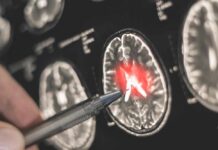
The implications for Alzheimer’s disease and Parkinson’s disease are profound. Voice biomarkers predict disease progression two years into the future. Acoustic features correlate with hippocampal volume—the brain region first damaged in Alzheimer’s. Lexical-semantic patterns in speech associate with cerebrospinal fluid amyloid-beta levels, the hallmark protein of neurodegeneration. For Parkinson’s disease specifically, reduced variability in fundamental frequency appears up to five years before clinical diagnosis, when 60 to 80 percent of dopamine-producing neurons have already died. Earlier detection means earlier intervention when treatments are most effective.
Technology That Fits in Your Pocket
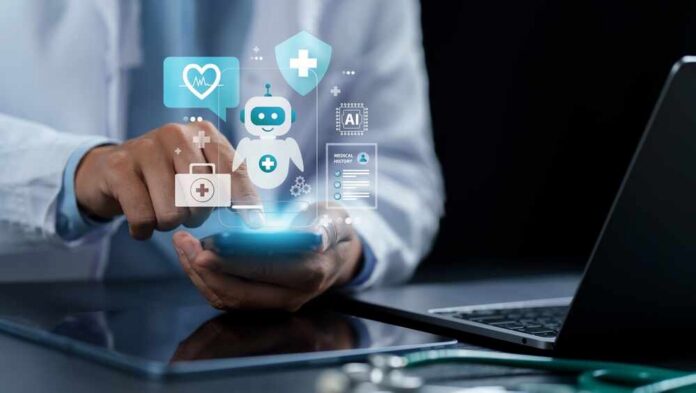
This isn’t futuristic fantasy requiring specialized equipment. Patients record voice samples using standard smartphones or microphones. Deep learning models analyze spectrograms—visual representations of sound frequencies—to classify laryngeal cancer, benign vocal fold lesions, and healthy voice function. Convolutional neural networks process the data. Results return within minutes. The scalability implications are staggering: underserved populations in rural areas or developing nations gain access to screening that previously required expensive imaging centers and specialist availability. Digital health platforms integrate voice biomarkers into telemedicine workflows, enabling remote monitoring of chronic heart failure and other conditions requiring continuous surveillance.
The Broader Disease Detection Landscape
Researchers have expanded voice biomarker applications beyond cardiovascular and neurodegenerative diseases. Vocal patterns reveal depression, autism spectrum disorders, diabetes complications, respiratory disorders, and anxiety. The unifying principle: disease alters the motor and cognitive systems controlling speech production. Voice captures these changes systematically, objectively, and non-invasively. Each disease leaves its acoustic fingerprint. Machine learning algorithms learn to recognize these patterns across diverse populations, though researchers acknowledge that current studies focus on limited demographic groups requiring broader validation.
The Remaining Questions Holding Back Clinical Adoption
Despite compelling research, significant barriers remain before voice biomarkers become standard clinical practice. Regulatory pathways through the FDA remain unclear. Clinician training requirements haven’t been established. Sample sizes in some studies are limited, particularly regarding gender diversity. Demographic generalizability needs strengthening—most research focuses on specific populations. Data privacy and security protocols for voice recordings require careful development. Integration into existing clinical workflows demands validation in real-world settings beyond controlled research environments. These practical challenges, while surmountable, explain why voice biomarkers haven’t yet transformed routine medical practice despite years of promising research.
Why This Matters Now
Healthcare systems face mounting pressure: aging populations, rising diagnostic costs, persistent disparities in underserved communities, and the reality that early intervention prevents disease progression far more effectively than late-stage treatment. Voice biomarkers address all these challenges simultaneously. They’re accessible, affordable, scalable, and scientifically validated. The convergence of artificial intelligence advancement, clinical research validation, and digital health infrastructure creates a genuine opportunity to shift medicine from reactive treatment to proactive prevention. The question isn’t whether voice biomarkers will transform healthcare—the research proves they can. The question is how quickly institutions will overcome regulatory, practical, and cultural barriers to make this technology universally available.
Sources:
Voice as a Digital Biomarker for Alzheimer’s Disease Detection
AI Uses Voice Biomarkers to Predict Coronary Artery Disease
Voice Assessment and Vocal Biomarkers in Heart Failure
Laryngeal Pathology Detection Using Voice Biomarkers and Deep Learning
Exploring Human Voice as a Biomarker for Disease Detection
Joint Research to Detect Early-Stage Dementia Using Vocal Biomarkers in Japanese Language
Vocal Biomarkers for Mental Health