A New York doctor says getting an extra measles shot carries little risk — and for some adults, it could close a gap left by a flawed vaccine given decades ago.
Story Snapshot
- Dr. Bruce Hirsch, an infectious-disease specialist at Northwell Health, discussed measles revaccination benefits and risks on CBS News New York.
- New York State reported 281 measles cases in 2026 as of November 14, with most outside New York City.
- People vaccinated between 1963 and 1967 may have gotten an ineffective shot and should ask a doctor about getting revaccinated.
- Health officials say an extra MMR dose is not harmful even if a person is already immune.
Doctor Addresses Growing Measles Case Count
Dr. Bruce Hirsch, an infectious-disease specialist at Northwell Health, spoke with CBS News New York about the benefits and risks of getting revaccinated for measles. The interview comes as measles cases climb across the state, pushing more adults to ask whether their old shots still protect them.
The New York State Department of Health reported 281 measles cases statewide as of November 14, 2026. Of those, 273 came from outside New York City, while eight were inside the city. State health officials pointed to this case count as part of their push to keep New York’s measles elimination status intact.
Who Needs a Second Look at Their Shot Records
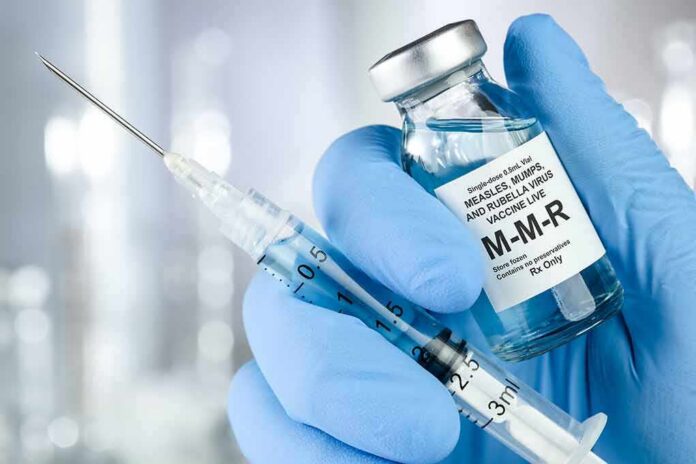
People born between 1957 and 1968 face a special concern. An inactivated measles vaccine was used in the United States from 1963 to 1967, and it did not work as well as the live vaccine that came later. Anyone who got a shot during those years, or who does not know which type they received, should talk to a doctor about getting revaccinated.
New York City’s health department states plainly that an extra MMR dose causes no harm, even for someone who might already be immune. This backs up the core message doctors like Hirsch are sharing: when in doubt, a booster shot is a low-risk choice. The guidance applies broadly, not just to people with confirmed gaps in their vaccine history.
How Well the Vaccine Works
Clinical guidance puts solid numbers behind the recommendation. One dose of the MMR vaccine is about 93% effective at preventing measles, and two doses push that number up to 97%. Health officials in Minnesota published those figures as part of broader guidance on responding to measles cases nationwide.
Pennsylvania’s health department has issued similar guidance, telling residents who got the 1963-to-1967 inactivated shot, or who are unsure which vaccine they received, that they qualify for catch-up vaccination during ongoing outbreak activity. That guidance lines up with recommendations in New York and reflects a shared approach across states dealing with rising case numbers.
Why the Message Can Get Lost
Short television segments often cannot capture every detail a doctor might cover in a longer conversation, including who should get a shot and who should not. Viewers may walk away unsure whether the advice applies to routine boosters or only to people with uncertain vaccine records from the 1960s. That gap between quick coverage and full clinical nuance is a real challenge in public health messaging.
Rising case numbers can also shift public attention toward urgency rather than the details of who actually needs another dose. With 281 cases already reported this year, officials are focused on outbreak response. That focus is reasonable, but it can crowd out quieter conversations about eligibility, contraindications, and the difference between filling a missed dose and adding one on top of documented immunity.
For most adults with two properly recorded MMR doses, health officials say no extra shot is needed. For those without clear records, especially anyone vaccinated in the mid-1960s, a conversation with a doctor remains the simplest way to close any gap and protect against a virus that is, once again, showing up in greater numbers across New York State.
Sources:
youtube.com, cbsnews.com, pa.gov, health.ny.gov, nyc.gov