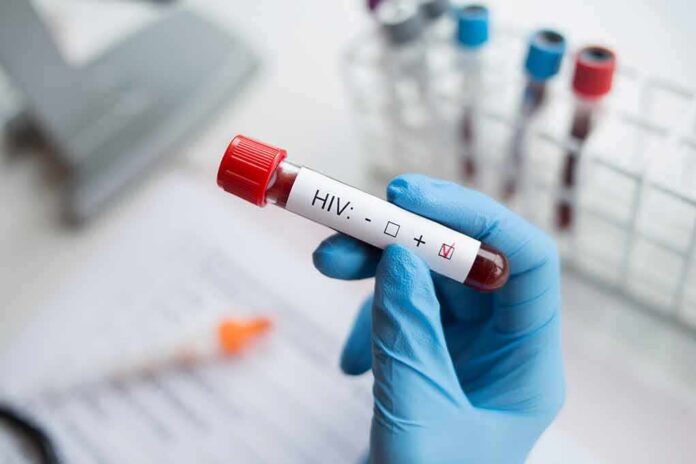
New HIV infections could climb for the first time in decades, and the United Nations says sudden cuts to global funding are the reason why.
Story Snapshot
- UNAIDS projects 1.4 million new HIV infections a year by 2030 if funding gaps continue, plus 3.9 million extra infections between 2025 and 2030.
- The warning follows real cuts already disrupting HIV prevention and treatment programs in hard-hit countries this year.
- The President’s Emergency Plan for AIDS Relief, known as PEPFAR, had committed about $4.3 billion in bilateral HIV support for 2025.
- UNAIDS says lower-middle-income countries alone need $1.4 billion more each year to stay on track for 2030 targets.
A Warning Built On Real Numbers, Not Guesswork
The United Nations agency tracking the global AIDS fight released its World AIDS Day report on November 25, 2025, with a stark projection. Modeling shows that if funding keeps shrinking, the world could see 1.4 million new HIV infections every year by 2030. That number represents a sharp reversal from years of steady decline in new cases worldwide.
The same report estimates 3.9 million additional infections could pile up between 2025 and 2030 compared to a scenario where countries hit their prevention targets. These are modeled projections, built from assumptions about funding, service access, and transmission patterns. They are not a count of infections that have already happened. But the disruptions driving the model are already real and documented.
Disruptions Already Hitting Clinics On The Ground
UNAIDS reported in July 2025 that sudden, large-scale cuts in international funding were already halting HIV prevention programs and putting treatment services at risk in the countries hit hardest by the epidemic. This was not a future worry. Clinics, outreach workers, and prevention drug access were already feeling the strain months before the November report came out.
The United States has long been the single largest funder of the global HIV response through PEPFAR. UNAIDS pegged that program’s 2025 bilateral commitment at roughly $4.3 billion, and the agency pointed to the United States as the source of the abrupt funding reductions rolling through the system. When a program that size pulls back fast, the ripple effects reach testing sites and pharmacy shelves almost overnight.
How Big The Epidemic Still Is
None of this unfolds in a vacuum. UNAIDS estimated 1.3 million people newly acquired HIV in 2024, down slightly from 1.4 million the year before. That downward trend took decades of sustained investment to build. The concern now is that a funding shock could stall or reverse that progress before new infections ever show up in official counts.
The money gap is not abstract either. UNAIDS calculated that lower-middle-income countries face the largest shortfall, a 19 percent gap that adds up to $1.4 billion a year in additional domestic and external financing needed to hit 2030 targets. Closing that gap would require either donor countries stepping back in or national governments finding new revenue, neither of which happens quickly.
What Independent Researchers Found In Specific Countries
Separate academic modeling adds texture to the UNAIDS projections. Researchers studying seven sub-Saharan African countries estimated the PEPFAR funding freeze alone could drive tens of thousands of additional infections depending on how long disruptions last. A South Africa-focused study found that ending PEPFAR-supported services without replacement could add between 150,000 and 296,000 new infections through 2028. A Zambia-focused model found unabated disruptions could add 3.3 million HIV acquisitions.
The head of the UN agency for Aids warned on Tuesday that new HIV infections could begin rising from historic lows next year due to funding cuts and anti-rights campaigns, just as the world is on the verge of eradicating the disease. New HIV infections fell to a historic low of… pic.twitter.com/vJablesPDC
— Daily Nation (@NationAfrica) November 25, 2026
These country-level studies use different assumptions and timeframes than the UNAIDS global model, which is why the estimates vary so widely. What they share is a common finding: when donor-funded HIV services stop without a replacement plan, infections climb. The scale of the increase depends heavily on how fast, and how fully, domestic systems or new donors can fill the gap.
Why This Matters For American Taxpayers And Allies
PEPFAR has been a rare bipartisan success story since President George W. Bush launched it in 2003, credited with saving millions of lives at relatively modest cost to American taxpayers. Any funding decisions going forward deserve scrutiny grounded in results, not politics, since the stakes for global stability and American credibility abroad are real.
UNAIDS is not a neutral bystander here. Its mission depends on sustained HIV financing, and that context is worth keeping in mind when reading its projections. Still, the underlying service disruptions it describes are documented, and the funding gaps it cites come with specific dollar figures. The debate ahead should focus on how to fund effective programs wisely, not whether the warning itself deserves attention.
Sources:
youtube.com, unaids.org, pubmed.ncbi.nlm.nih.gov