Half of a Swedish long-COVID clinic cohort still reports breathing trouble more than four years after infection, even when routine lung tests look near-normal.
Story Snapshot
- A Swedish team followed adults with post-COVID condition for a median of 50 months.
- Half screened positive for dysfunctional breathing symptoms at four years.
- Many standard lung-function results did not explain the breathlessness.
- Findings reflect a broader post-viral pattern: symptoms can outlast lab changes.
Four-Year Follow-Up Finds Lasting Breathing Symptoms
Researchers at Karolinska University Hospital tracked 288 adults treated for post-COVID condition and checked on them at a median of 50 months after infection. They used a validated screening tool, the Nijmegen Questionnaire, to flag patterns linked to dysfunctional breathing. A score of at least 23 marked a positive screen. One hundred forty-three people, or 50 percent, met that mark. The study offers a direct look at the four-year horizon, rather than a guess from shorter studies.
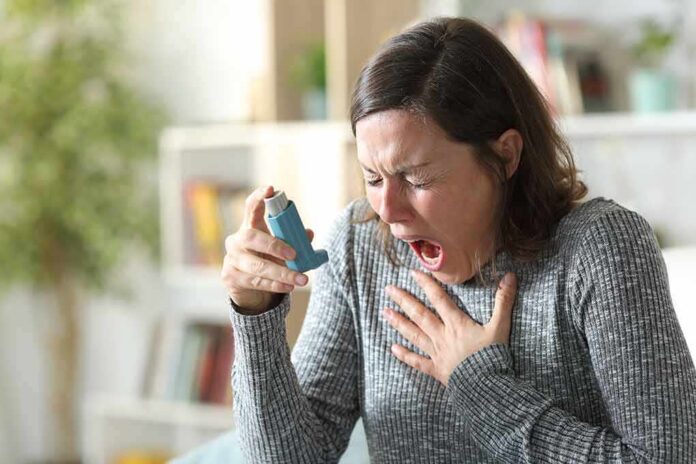
Patient reports described air hunger, chest tightness, frequent sighing, and fast or erratic breathing. These fit the umbrella of dysfunctional breathing. That term covers altered breathing patterns that cause real distress and limit activity. It does not mean people imagine symptoms. It means the control of breathing may be off-track and needs assessment and retraining. This is common in post-viral states and after severe illness. The study puts numbers on it at four years.
Symptoms High, Routine Lung Tests Often Near-Normal
Standard lung tests did not show a clear, equal rise in disease. Reports from coverage of the study note that many measures looked similar between those who screened positive and those who did not. That split matters. It warns doctors and patients not to stop at a normal spirometry test or a normal image if breathlessness persists. The symptom burden can be high even when the pipes and bellows look okay on basic checks.
A second long-term cohort from Saudi Arabia adds weight to the idea that some COVID survivors still face symptoms years later. That study tracked confirmed cases across four years and cataloged ongoing complaints. It shows a wide range of long-COVID issues, with breathing concerns among the most frequent. It is not the same clinic population as Sweden, but it points in the same direction: a slice of people do not bounce back fully on a fixed timeline.
What Dysfunctional Breathing Means for Care and Daily Life
Clinicians can pair symptom screens with structured exams of breathing pattern, exertion tests, and targeted rehab. Breathing retraining, paced breathing, and physical therapy can help many people regain control. That is practical, low-risk, and consistent with common sense: measure what the patient feels and train what is off. This approach respects the patient’s reality and avoids over-medicalizing normal tests. It also aligns with conservative values of personal agency, measurable goals, and results-driven care.
Policy should not confuse a clinic cohort with the general public. The Swedish group came from a specialist post-COVID clinic. The findings do not mean half of all who had COVID now have lung disease. They do mean that among people who needed long-COVID care, breathing symptoms can last for years. Precision in scope protects resources for those most affected while avoiding fear for those who recovered fully.
Why Symptoms Linger When Labs Look Fine
Post-viral medicine has seen this split before. Reviews of long-COVID show breathlessness, cough, and chest pain remain common, while clear test abnormalities fade over time in many who were hospitalized early on. Symptoms can outlast lab changes because control systems, muscles, and perception all shape how we breathe. A normal scan does not switch off discomfort if the system’s rhythm is still off. That gap calls for better tools, not dismissal.
One caveat applies: a positive Nijmegen Questionnaire is a screen, not a diagnosis. The study authors urge pairing patient-reported data with direct observation of breathing and measures of ventilatory control. That is a sound plan. Keep the bar high for diagnosis, but do not ignore what the patient reports. The smartest path is simple: listen, test, train, and recheck. Four years on, that is how you turn a slow, stubborn symptom into a plan with traction.
Sources:
cidrap.umn.edu, link.springer.com, pmc.ncbi.nlm.nih.gov